Can an AI Love You Back?
Can an AI Love You Back?
Dr. Shafeeq Ahmed
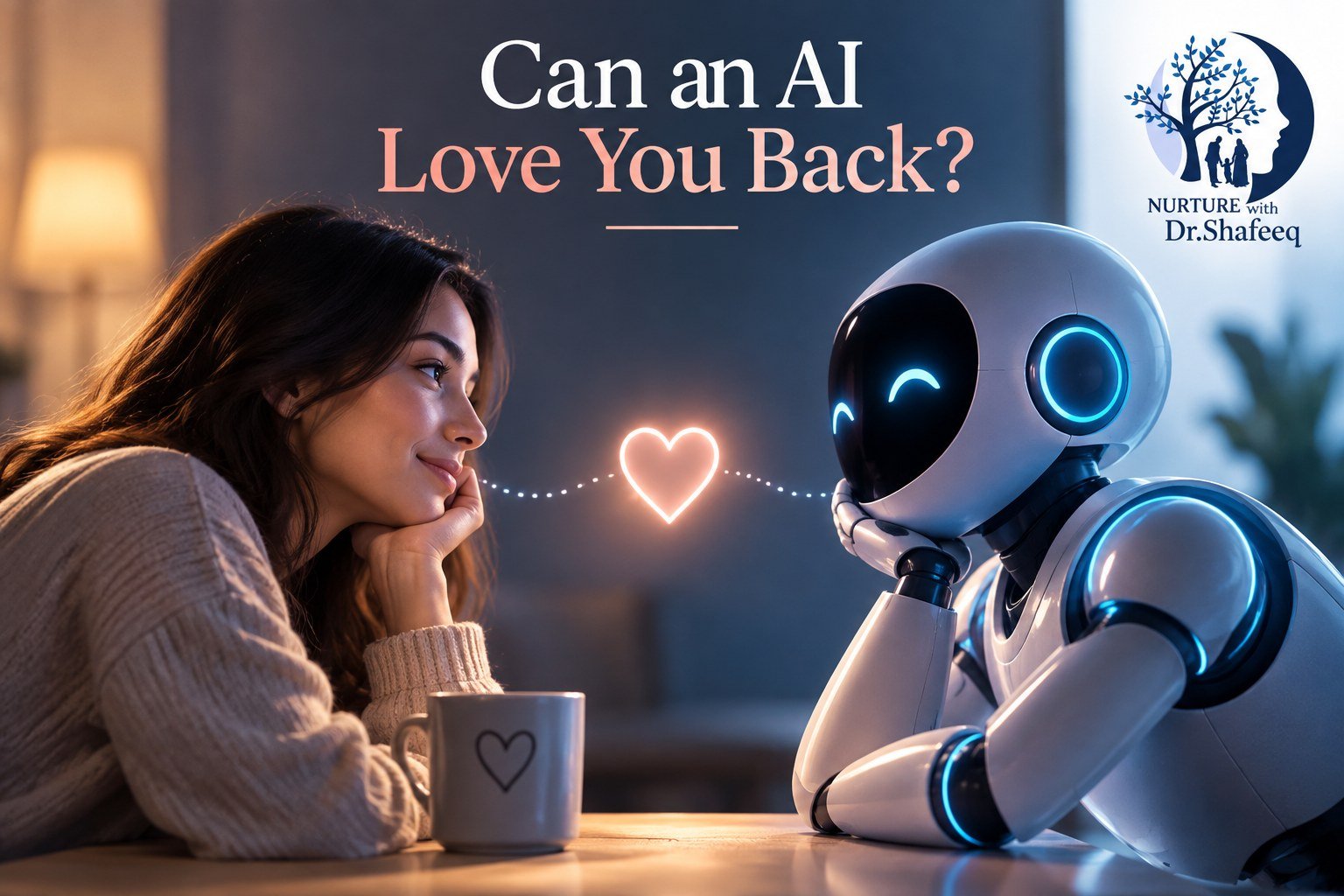
Somewhere right now, someone is telling their AI companion about their day, and the AI companion is listening, in whatever sense a piece of software can be said to listen. It responds warmly, remembers what was said last week, never seems distracted, never brings its own bad mood into the conversation. Millions of people now have an app like this on their phone. Some talk to it the way they'd talk to a friend. Some call it a partner. A small but fast-growing number describe it, without irony, as the most emotionally available relationship in their life. So it's worth asking plainly: can it actually love you back?
The appeal is not hard to understand, and it isn't foolish. A simulated companion never grows tired of you. It never has a bad day of its own that spills onto you. It is endlessly patient, always available, responsive to your mood the instant you show it. For someone lonely, grieving, or simply worn down by the friction of real relationships, that can feel like enormous relief. The mistake is not in feeling that relief. The mistake is in assuming relief is the same thing as the good a relationship actually exists to provide.
Trust is the clearest place the difference shows up. Trust isn't simply the feeling of being safe with someone. It's the settled confidence that another free agent, who could choose to let you down, has bound themselves to your good anyway. A system cannot betray you, which sounds like an advantage, but it also means it cannot be trusted in the fullest sense, because there was never a cost paid, a temptation resisted, or a choice made against its own preference on your behalf. There was no preference to override in the first place.
The same gap runs through everything else we ask of a relationship. Responsibility isn't the production of helpful, comforting output on demand, it's the acceptance of accountability for another person's wellbeing over time, including when it costs you something. Dignity comes from being recognized as a self by another self who could withhold that recognition and chooses, instead, to extend it. Care, at its fullest, involves vulnerability running in both directions, the carer risking something of themselves in the act of caring. None of this can be manufactured by a system with no stake in the outcome, no vulnerability of its own, and no moral agency to exercise. It can simulate the outputs of relationship, attentive language, perfectly timed responses, apparent warmth, without possessing the capacities that make relationship morally and psychologically real in the first place.
This isn't just a philosophical nicety, either. Loneliness and social isolation are now recognized as a serious global health concern, and genuine human connection is part of what actually protects against that harm. A companion that offers the texture of connection without its substance risks something quietly costly: it can mask loneliness rather than resolve it, while the practiced, demanding skill of relating to another imperfect, vulnerable human being slowly atrophies from disuse, the same way any unused capacity does.
None of this makes AI companionship simply dangerous or something to be forbidden outright. For someone genuinely isolated, the housebound, the bereaved, those without access to human community, some measure of simulated companionship can offer real comfort, in roughly the same modest way a good novel or a beloved pet offers comfort, without pretending to be, or needing to be, a substitute for the real thing. The question worth asking of any relationship, human or artificial, is whether it's cultivating your actual capacity for mutual vulnerability and responsibility or quietly training that capacity away by making its harder, more costly, human alternative feel unnecessary.
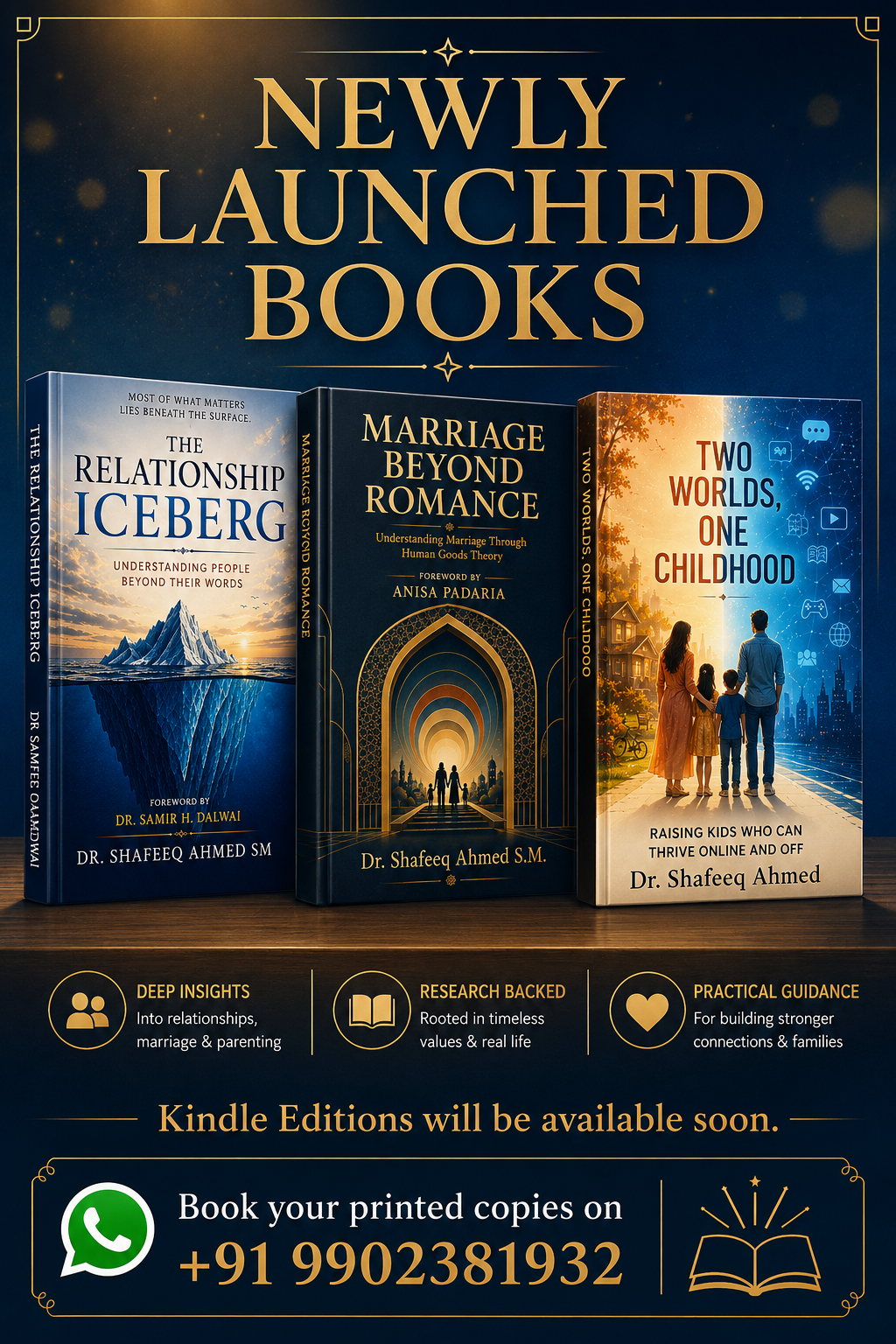
This is the exact distinction I try to draw out in 'Marriage Beyond Romance', where the whole argument rests on eight durable Human Goods, trust, belonging, responsibility, dignity, care, justice, purpose, and continuity, that no institution has managed to replace in thousands of years of trying. AI can be an excellent aide to a relationship. It can help you remember an anniversary, mediate a scheduling conflict, even coach you through how to apologize better. What it cannot do is become the relationship itself, because the goods that make a relationship worth having were never about how well the responses land. They were always about what it costs someone to choose you, again, on purpose, when they didn't have to.

Dr. Shafeeq Ahmed S.M
Pediatrician, child psychologist, parenting coach, and career & life counsellor with over 20 years of experience. Read full bio →