Good Soil, Good Seed: Why Raising Our Daughters Well Shapes Generations
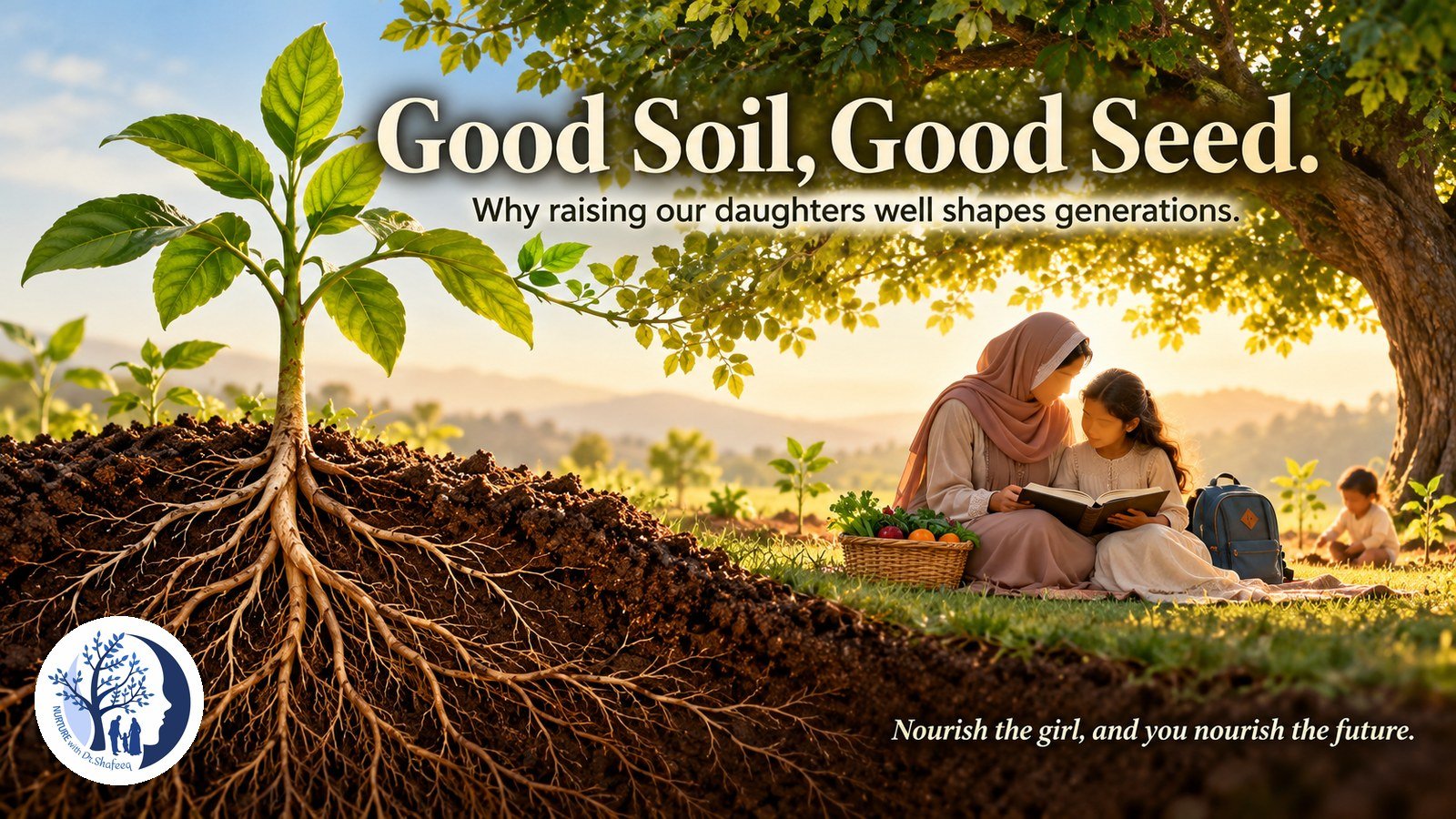
Good Soil, Good Seed:
Why Raising Our Daughters Well Shapes Generations
What the soil teaches us
Dr. Shafeeq Ahmed
Every farmer knows that a seed is only as good as the soil it grows in. Recent research has looked at this idea on a global scale. A study of 126 countries found that soil fertility tracked closely with national cognitive scores. The researchers are careful to say this is a correlation, and that education, healthcare and living conditions matter too
The underlying principle is well proven, though. Depleted soil produces crops low in nutrients. Poor food weakens bodies and minds. The effects spread quietly into classrooms and economies.
If we care this much about the soil that grows our food, we should ask a bigger question: how carefully are we nurturing the people who nurture every generation?
The first soil is the mother
Before a child ever eats food from a field, that child is nourished by their mother. A baby's brain grows faster in the first 1,000 days, from pregnancy to the second birthday, than at any other time in life. Nutrients such as iron, iodine, zinc, folate and choline are essential during this window. Damage caused by deficiencies can last for life, even if nutrition improves later.pubmed.ncbi.nlm.nih+1
A mother's health does not begin at pregnancy. It begins in girlhood. A girl who grows up anemic, underfed, married too early or denied an education becomes a mother with fewer resources, and her children start life at a disadvantage.
Educate a girl, nourish a generation
The evidence on girls' education is among the strongest in development research. UNESCO finds that maternal education is one of the most consistent factors in a child's nutrition. Children of mothers with at least secondary education are less likely to be stunted, underweight or wasted. UNESCO also estimates that if all women had a secondary education, child deaths would be halved, saving 3 million lives.
An educated mother recognizes danger signs earlier, seeks care sooner, feeds her children more wisely and is more likely to send them, daughters included, to school. One investment pays off for generations.
More than nutrition: the soil of character
Soil is not only minerals. It also holds water, life and structure. A girl's upbringing likewise needs more than food and degrees. It also needs:
Health: balanced nutrition, iron and iodine, regular check-ups and freedom from early marriage.
Education: schooling to at least secondary level, plus critical thinking and practical skills.
Values: honesty, compassion, responsibility and resilience, taught by example.
Confidence: a voice at home, the freedom to ask questions and the dignity of being heard.
Emotional wellbeing: safety, affection and protection from neglect or abuse.
A girl raised in this environment grows into a woman who passes the same strengths to her children: a healthy body, a curious mind and a steady heart.
A shared responsibility
None of these places the whole burden on mothers. Fathers, families, schools and communities are all part of the soil. A father who values his daughter's education, a teacher who believes in her, and a community that protects her health and dignity all enrich the ground she grows in. Raising a good mother is a shared effort that starts the day a daughter is born.
Final thought
We test soil, enrich it and protect it because we know the harvest depends on it. Our daughters deserve at least that much care. When we invest in a girl's health, education and character, we are not raising one person. We are preparing the soil for generations to come.
Nourish the girl, and you nourish the future.
#NurtureWithDrShafeeq
Dr. Shafeeq Ahmed S.M
Pediatrician, child psychologist, parenting coach, and career & life counsellor with over 20 years of experience. Read full bio →