Prevent the Cancer, Not the Conversation
Prevent the Cancer, Not the Conversation
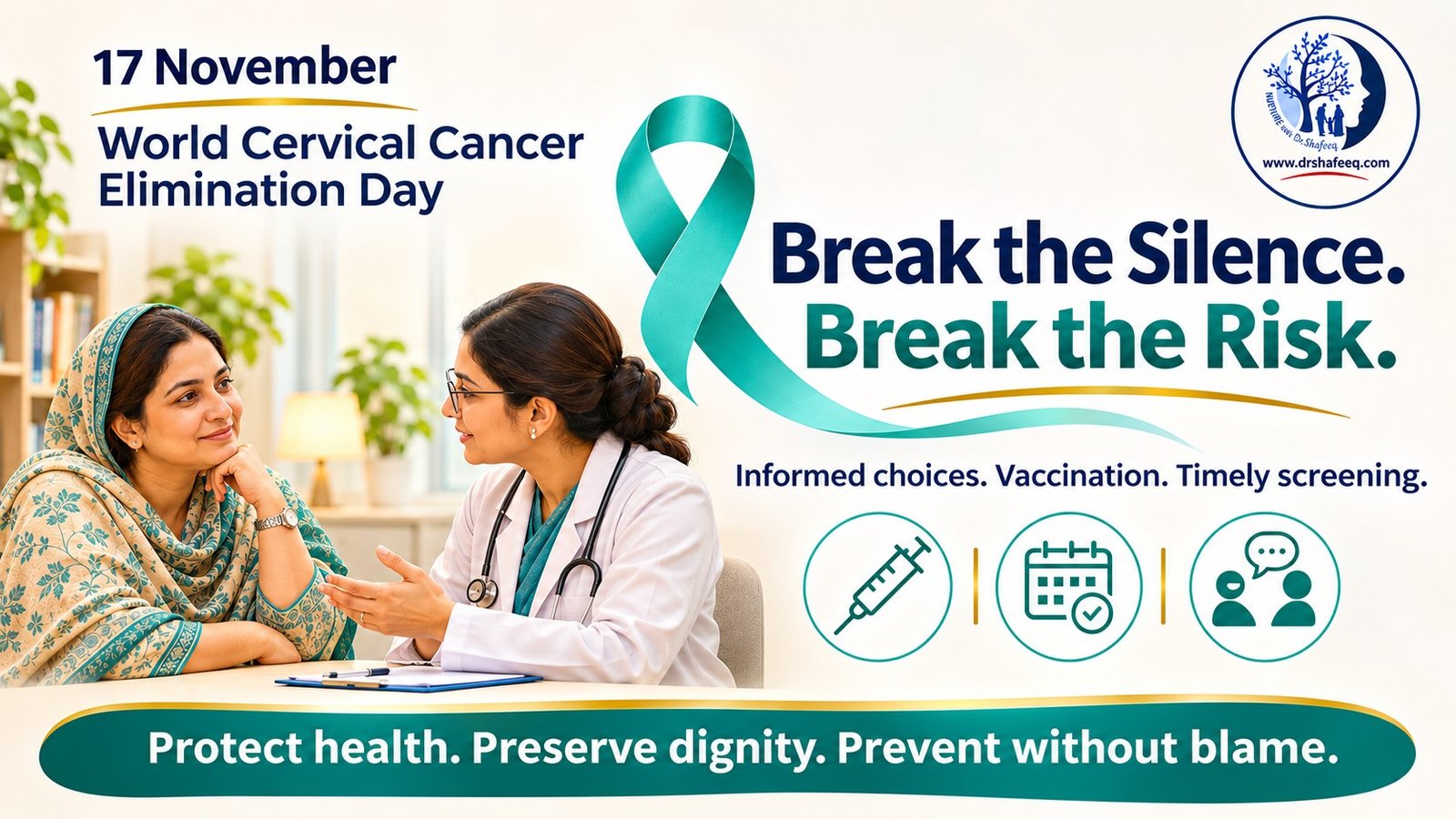
World Cervical Cancer Elimination Day | 17 November
By Dr. Shafeeq Ahmed
A mother may remember every vaccination her child needs yet postpone her own screening. A father may want to protect his daughter yet hesitate over a vaccine he does not fully understand. A faithful couple may assume that cervical cancer cannot concern them.
These are not reasons for criticism. They are reasons for better conversations.
On World Cervical Cancer Elimination Day, the message is both hopeful and practical: cervical cancer is largely preventable, and early disease can often be successfully treated. Prevention requires informed choices, responsible relationships and accessible healthcare—not fear or silence.
As a pediatrician working with children and families, I see a clear connection: an important opportunity to prevent this adult cancer begins in adolescence, when families make decisions about HPV vaccination. WHO prioritizes vaccination for girls aged 9–14, before exposure to the virus.
Understand the infection—without judging the person
Almost all cervical cancers develop following persistent infection with high-risk types of human papillomavirus, or HPV. It spreads mainly through intimate sexual skin-to-skin contact, not only penetrative intercourse. Most infections resolve naturally; some persist and cause precancerous changes that may eventually become cancer. An HPV-positive result does not mean someone has cancer.
Equally important, HPV can remain undetected for years. A positive result cannot reliably establish when infection occurred or who transmitted it. It is not proof of infidelity. Awareness should open the door to care—not suspicion, shame or marital conflict.
Ethical relationships matter—but do not confer immunity
Sexual responsibility deserves an honest place in prevention. Avoiding sexual exposure, delaying sexual debut, limiting partners and maintaining mutual faithfulness reduce opportunities for HPV transmission. These responsibilities apply equally to men and women. A woman with one lifetime partner may still encounter HPV through that partner’s previous exposure.
Faithfulness, consent, honesty and respect are valuable in their own right. But current monogamy does not erase a previously acquired infection, and marriage itself does not establish either partner’s HPV status. Condoms reduce transmission risk but cannot completely prevent it because exposed skin may carry the virus.
Male circumcision can also offer partial, indirect protection. Research supports reduced genital HPV infection in men and reduced high-risk HPV infection in female partners; observational studies associate it with lower cervical cancer risk. It is not immunity and does not replace vaccination or screening.
The balanced position is clear: responsible living and medical prevention complement each other. Neither a diagnosis nor the need for screening is a verdict on someone’s character.
Vaccination: informed reassurance, not blind reassurance
HPV vaccines prevent new infections with targeted HPV types; they do not treat an existing infection or cancer. Vaccinating before exposure provides the greatest benefit. National recommendations determine eligibility, dose schedules and vaccination opportunities for other age groups and boys. Offering a child cancer prevention is not a prediction about their future behavior.
Parents are entitled to ask about safety.
HPV vaccines have a well-established, reassuring safety record. Common effects include a sore arm, headache, mild fever, tiredness or nausea, usually lasting a short time. Fainting can occur around injections, particularly in adolescents, so seated vaccination and observation afterwards are important. Severe allergic reactions are very rare, and vaccination services must be equipped to manage them.
Available evidence does not support claims that HPV vaccines cause infertility. Vaccination is generally postponed during pregnancy, and anyone with a severe reaction to a previous dose or vaccine component needs individual medical advice. Informed consent means explaining benefits and risks accurately—not claiming that any medical intervention is entirely risk-free.
Screening is for women who feel well
Precancer often causes no symptoms. Screening can identify high-risk HPV or abnormal cervical cells before cancer develops, allowing timely assessment and treatment. Vaccinated women still need screening according to national guidance and their medical history. A stable marriage or a circumcised partner is not a reason to opt out.
An abnormal screening result is not automatically cancer, but recommended follow-up matters. A test only becomes effective prevention, when necessary, assessment and treatment are completed.
Bleeding after intercourse, bleeding after menopause, persistent, unusual discharge or pelvic pain warrants medical assessment rather than waiting for routine screening. These symptoms have several possible causes but should not be ignored.
HPV is central—but not the entire story
Smoking and weakened immunity, including HIV or immune-suppressing treatment, can increase the risk of HPV-related disease progressing. Certain reproductive factors and long-term oral contraceptive use are also associated with risk. Women should discuss their circumstances with a clinician rather than abruptly stopping contraception.
A small minority of cervical cancers develop independently of HPV, including gastric-type cervical adenocarcinoma. Historical exposure before birth to the medicine DES is another recognized risk factor for a rare cervical cancer. “Almost all cervical cancers are HPV-related” is therefore more accurate than “all”.
Make prevention a shared responsibility
Families can help without controlling support appointments, respect privacy and respond to concerns without accusation. Healthcare services must make vaccination, screening and follow-up affordable, understandable and reachable.
This 17 November, take one practical step: check a child’s vaccination eligibility, find out when screening is due, or complete an outstanding follow-up appointment.
Ethical living deserves its place. Vaccination deserves informed consideration. Screening deserves timely attention. And every woman deserves care without blame.
Cervical cancer prevention needs all four.
This article provides general health information, not individual medical advice. Follow local vaccination and screening guidance and consult a qualified healthcare professional about personal circumstances.
#NurtureWithDrShafeeq

Dr. Shafeeq Ahmed S.M
Pediatrician, child psychologist, parenting coach, and career & life counsellor with over 20 years of experience. Read full bio →