Rehumanizing the Workplace
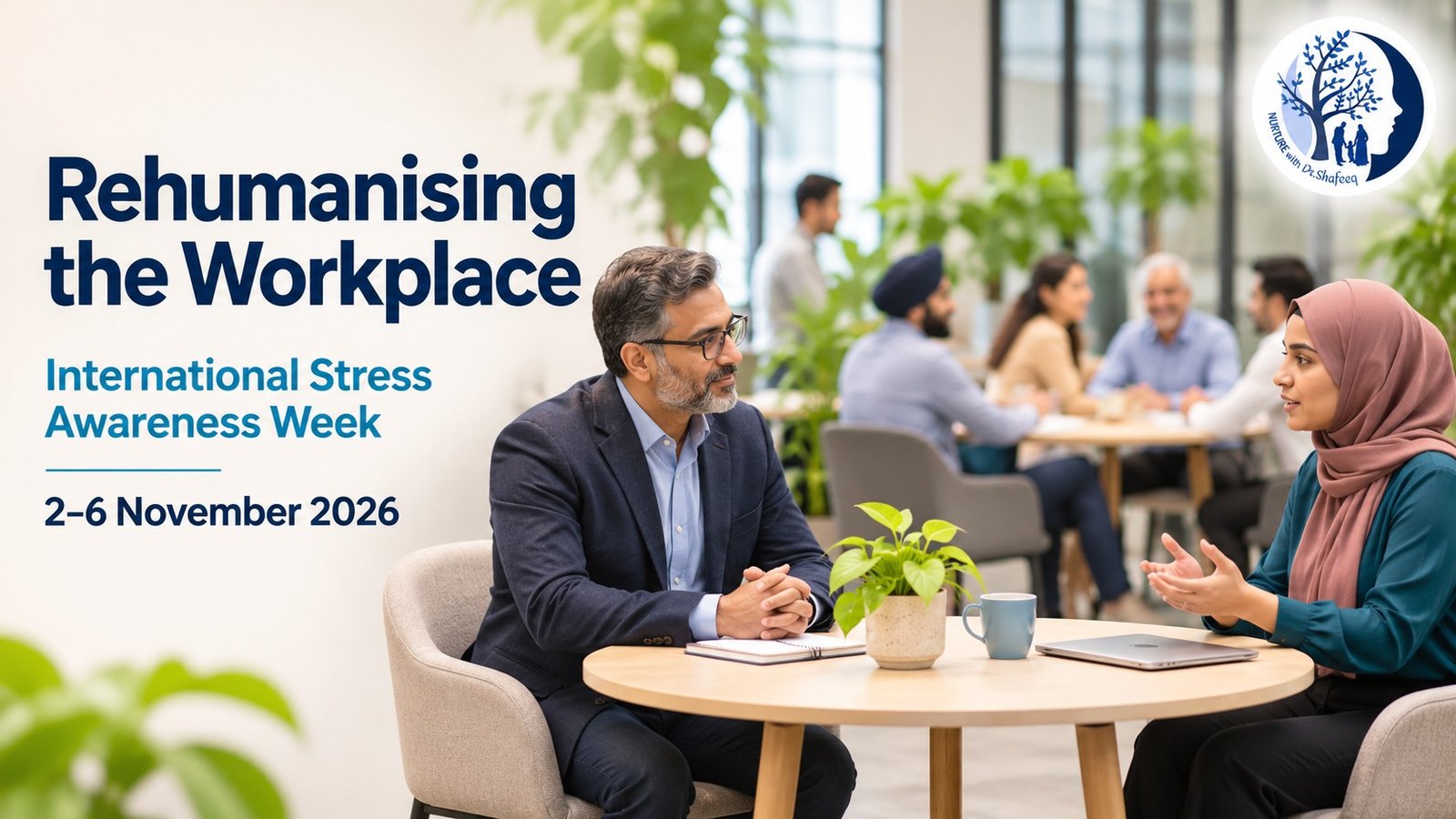
Rehumanizing the Workplace
Because people are more than their productivity
Dr. Shafeeq Ahmed
“I’m fine. Just busy.”
In many workplaces, that answer has become routine. Behind it may be exhaustion, family pressures, or the feeling that no matter how much gets done, it is never enough.
International Stress Awareness Week, led by ISMA UK and observed from 2–6 November 2026, invites us to take these pressures seriously. This year’s theme—“Shaping the Future of Stress and Wellbeing: Rehumanizing the Workplace”—puts people back at the center of working life.
The challenge is not simply to help people tolerate more pressure. It is to create conditions in which good work and personal wellbeing can coexist.
See the Person Behind the Role
An employee is more than a job title, performance score, or available slot on a Rota. They may also be a parent, caregiver, or someone managing difficulties that colleagues cannot see.
That applies to everyone—from frontline staff to managers, business owners, teachers, and doctors.
Being capable does not mean having unlimited capacity. Someone can be dedicated and still need rest. They can be dependable and still need help.
A humane workplace asks not only, “Is the work getting done?” but also, “What is making it difficult?”
Move Beyond “Be More Resilient”
Personal coping strategies matter, but they cannot resolve every workplace problem.
A breathing exercise cannot redistribute an excessive workload. Encouragement to take leave means little if no one provides cover.
WHO’s mental health at work guidance includes organizational measures addressing workload, schedules, communication, and teamwork alongside individual support.who+1
The distinction is important: wellbeing should influence how work is organized, not remain a message on an awareness poster.
Practical Tips for Managers
Managers can turn concern into action through everyday decisions:
Set realistic priorities. Make clear what must happen now, what can wait, and what can stop.
Check capacity before adding tasks. Agree on what will be postponed, reassigned, or removed.
Protect breaks and leave. Arrange cover so time off does not simply create a larger backlog.
Reduce unnecessary administration. Review repetitive meetings, duplicate reports, and tasks without a clear purpose.
Hold supportive check-ins. Ask, “What is making your work harder?” and “What practical change would help?”
Respect privacy. Do not make personal disclosure a condition for listening to a concern.
Respond to mistreatment. Take disrespect seriously, whether it comes from colleagues, customers, clients, or patients.
Model reasonable boundaries. Avoid treating constant availability as proof of commitment.
Explain available support. Make access routes and confidentiality arrangements clear.
Follow through. Tell people what will change, who is responsible, and when progress will be reviewed.
Start small if necessary: identify one avoidable pressure with your team and work together to reduce it. Workload adjustments and improvements in communication are among the organizational approaches identified in WHO guidance.
Remember Those Who Care for Others
Teachers, caregivers, and healthcare professionals spend much of their working lives responding to other people’s needs. Their own needs should not become invisible.
The Medscape emergency medicine report excerpts illustrate this concern through accounts of prolonged burnout, relationship strain, and reluctance to seek support. The wider lesson applies across professions: dedication should never be mistaken for invulnerability.
Support should be available before someone reaches breaking point—not only after their performance suffers.
Make Space for Personal Care, Too
Workplace reform and individual care belong together.
Regular meals, movement, connection with trusted people, and enjoyable activities can support wellbeing. But persistent low mood or loss of interest deserves appropriate professional attention, not dismissal as ordinary stress.
Employees should not carry sole responsibility for fixing difficult working conditions. Equally, improving those conditions should not mean overlooking someone’s need for individual care.
A Better Measure of Success
A workplace should be judged not only by what people accomplish, but also by the conditions in which they accomplish it.
This International Stress Awareness Week, let us move beyond praising resilience to building a more sustainable working life.
Behind every deadline, decision, and completed task is a human being whose wellbeing matters—even when they are still getting the job done.
#NurturewithDrShafeeq

Dr. Shafeeq Ahmed S.M
Pediatrician, child psychologist, parenting coach, and career & life counsellor with over 20 years of experience. Read full bio →