Struggle Isn't the Enemy. Facing It Alone Is.
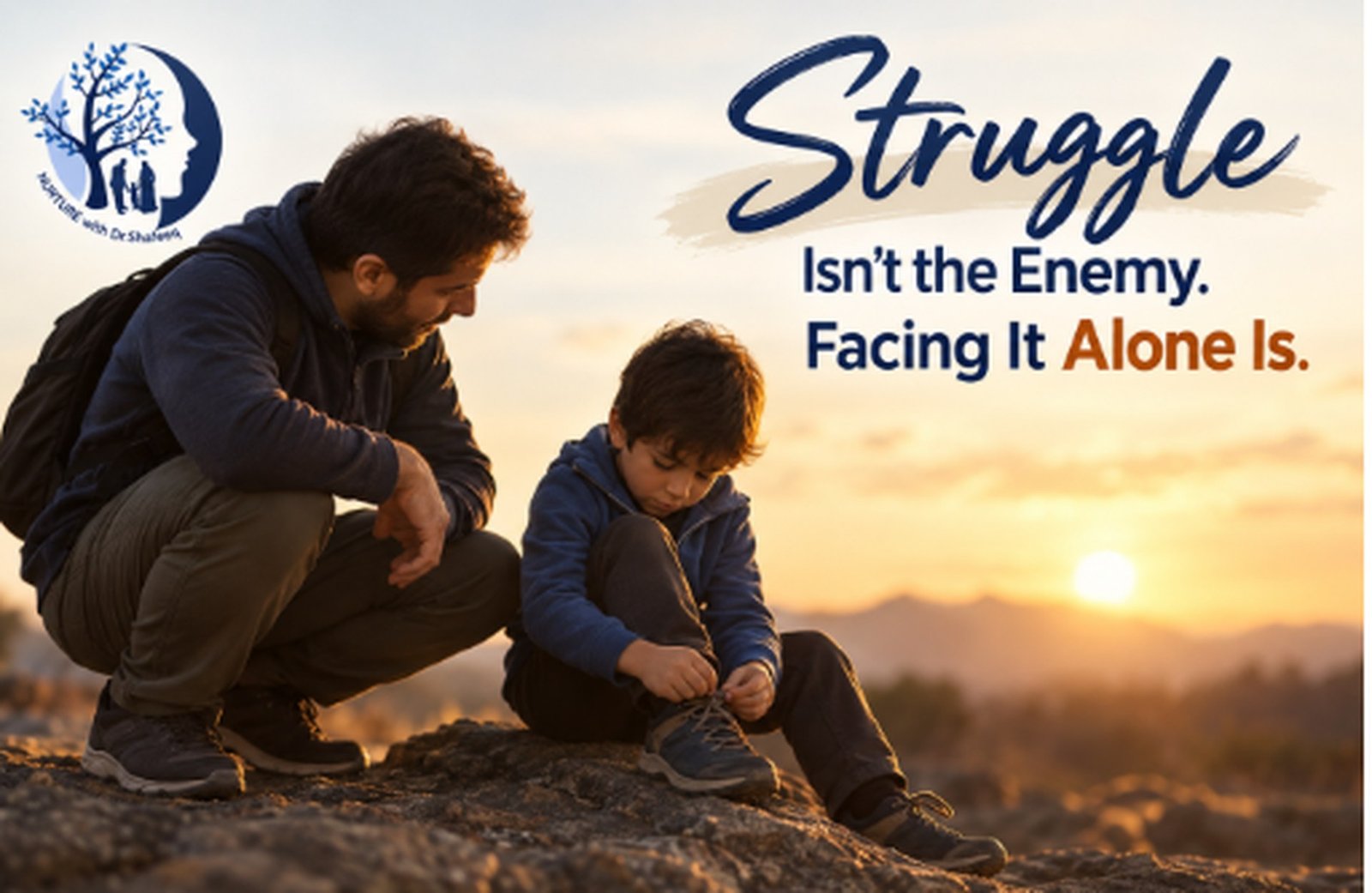
Struggle Isn't the Enemy. Facing It Alone Is.
Dr. Shafeeq Ahmed
Watch a parent standing near a child wrestling with a stuck shoelace, a hard math problem, or a falling out with a friend, and you'll usually see the same thing happen within about thirty seconds: the parent steps in and fixes it. Not out of impatience, usually, but out of something that looks a lot like love and is actually closer to discomfort, the parent's own discomfort at watching a child they adore struggle with something. The trouble is, that reflex, repeated enough times across childhood, quietly teaches a child that difficulty is something other people resolve, not something they themselves can move through.
Resilience has become one of those words we praise in the abstract and then systematically prevent in practice. We want children who can recover from setbacks, tolerate frustration, and keep going after failure, and then we intervene at the first sign of any of the very friction that would actually build those capacities. The confusion, I think, comes from treating struggle and suffering as the same thing, when they are not. Struggle is difficulty a child's nervous system can stretch to meet, with effort, frustration, and even tears, but within a range they can eventually work through. Suffering is difficulty that overwhelms a child's capacity to cope, particularly when they are facing it without support. The distinction that matters for a child's development isn't the presence or absence of hardship. It's whether a caring adult is close enough to make the hardship survivable without stepping in to make it disappear.
This is actually a well-established idea in developmental science, though it rarely gets stated this plainly to parents: what turns ordinary hardship into lasting harm isn't the hardship itself; it's hardship endured in isolation, without a steady relationship to buffer it. A child who struggles with a hard problem while a parent stays calmly nearby, available but not rescuing, is having a completely different experience than a child facing the same problem while feeling abandoned to it. Same difficulty. Radically different developmental outcome. The parent's job was never to remove the obstacle. It was to be the secure presence that makes facing the obstacle survivable.
In practice this looks less dramatic than it sounds. It looks like sitting on your hands while a toddler fumbles with a zipper for another ninety seconds. It looks like saying "that sounds really frustrating" instead of immediately explaining the homework answer. It looks like letting a teenager sit with the sting of a friend's unkind comment for an evening before offering guidance, instead of leaping in to fix the friendship on their behalf. None of this is neglect. The parent is right there, watching, available, ready. What's being withheld is the rescue, not the relationship.
Where this actually goes wrong, and it's worth naming clearly, is when adults confuse this principle with an excuse for genuine neglect, harsh treatment, or leaving a child to face something truly beyond them because "struggle builds character." A child who is shutting down, dissociating, or clearly in over their head needs a parent to step in, not a lecture about resilience. The skill this whole idea depends on is a parent's ability to tell the difference between a child who is stretched and a child who is drowning, and that judgement, more than any specific technique, is what real parenting expertise actually consists of.
This is exactly the ground I try to cover in the "Emotional Child" section of my book, 'Two Worlds, One Childhood," because emotional resilience isn't a trait some children happen to have and others don't. It's a capacity built, session after ordinary session, by exactly this kind of calibrated presence, close enough to make hardship survivable, restrained enough to let the child do the actual work of surviving it. In a world that increasingly hands children instant answers and on-demand relief for anything unpleasant, that calibration has become harder to practise and more important than ever.
If you're a parent who catches yourself rescuing before you've even asked whether rescue is actually needed, you're in good company; it's the instinct nearly all of us start with. The shift worth making isn't to stop caring. It's to start asking, every time, whether your child needs you to solve this, or simply needs to know you're still there while they do.

Dr. Shafeeq Ahmed S.M
Pediatrician, child psychologist, parenting coach, and career & life counsellor with over 20 years of experience. Read full bio →