A Program Ends. A Platform Keeps Giving.
A Program Ends. A Platform Keeps Giving.
Giving without expectation, and why I build platforms, not just programs
Dr. Shafeeq Ahmed
Someone recently asked me a fair, slightly curious question. "Doctor, you run personality-building workshops, science fairs, introductions and networking meetings through Nurture with Dr. Shafeeq, Ahlan Rishta and InBx. You give your time, your energy and often your own resources. What do you actually get out of it?"
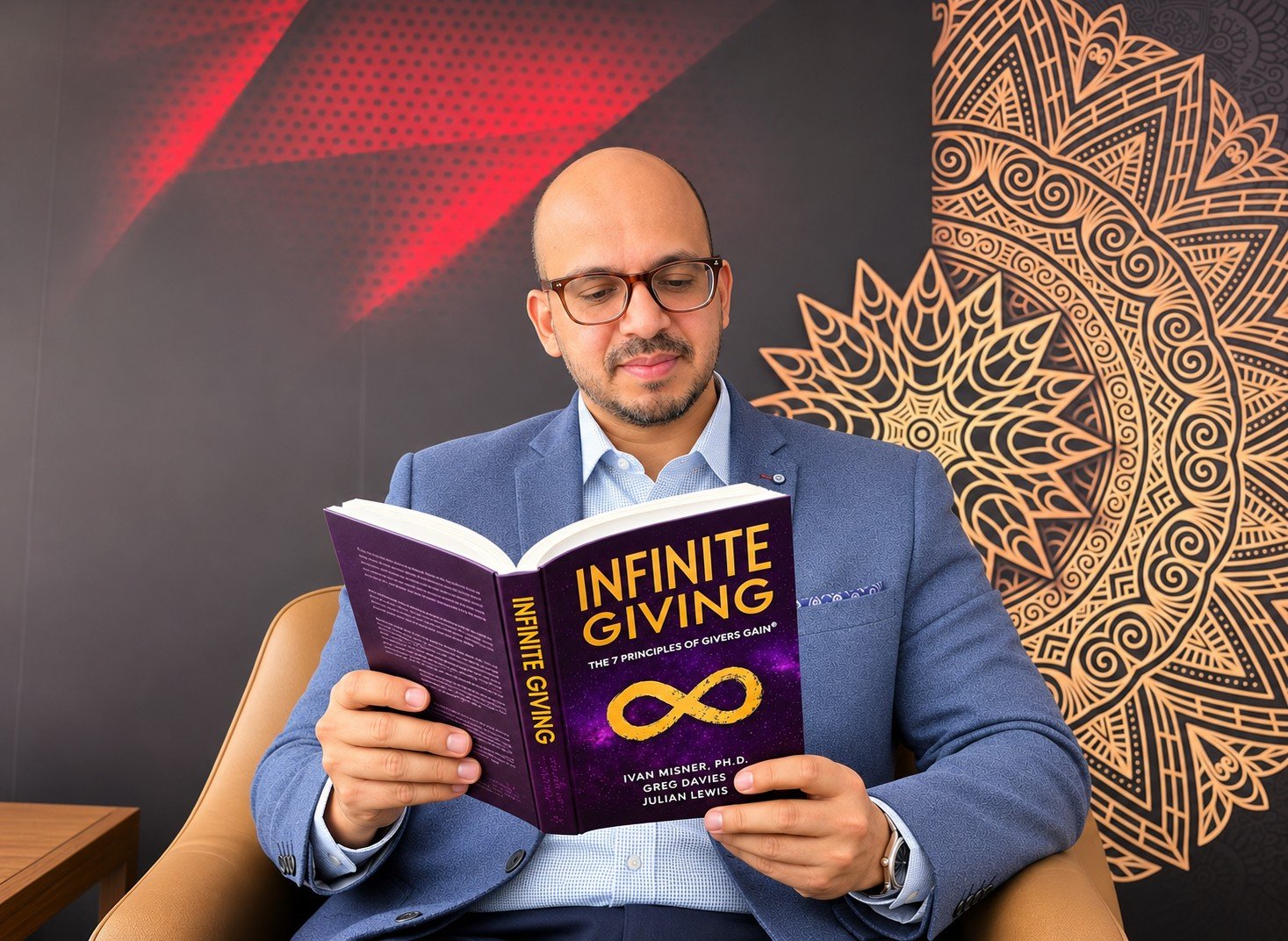
I understand why people ask. We live in a world where almost everything has a price tag, and when something doesn't, we wonder where the catch is. My honest answer is that a program ends when the event ends, but a platform keeps the giving going. Part of that answer came from an unexpected place: Infinite Giving: The 7 Principles of Givers Gain®, by Ivan Misner, Greg Davies and Julian Lewis. The book did not teach me to give. My parents, my faith and my profession did that long ago. But it gave words and structure to something I had felt for years.
A simple idea that needs protecting
The book rests on one belief: the world becomes a better place when our first instinct is to give rather than to take. The authors admit the idea is almost childishly simple, and they see that as its strength. They also warn that giving can turn into people-pleasing, into exhaustion, or into a quiet trade where we secretly keep score.
So, they set out seven principles to keep giving healthy:
Are they in your light?
Give without expectation.
Give more than expected.
Give what you can afford.
It's OK to gain.
Stay humble.
Show gratitude.
The first one made me pause. It asks whether our help is actually wanted, or whether we are standing in someone's way while believing we are helping. Real giving begins with listening, not with doing.
Why motive matters more than the gift
Giving without expectation does not mean we stop caring about results. It means we look honestly at why we give. The authors describe healthy motives: in a community, what one person does, others begin to do; others would do the same for us; we have benefited before and want to return the favor; people working together achieve more than people working alone; and giving brings us joy.
That last reason is rarely admitted, yet it is often the truest. Anyone can be generous on a good day. Giving again and again, year after year, needs a motive that you understand and that the people around you can trust. For me, giving without expectation means I do not put a price on a gift before I offer it. I trust that a community built on giving will, in its own time, strengthen everyone within it, including me.
Keeping the giving alive
Give more than expected. A parent who leaves a workshop with one extra practical tip, or a professional who receives one more useful introduction than they asked for, remembers that feeling.
Give what you can afford. Some generous people give so much that their families, health or finances suffer. That is not virtue, it is a slow collapse. Sustainable giving is wiser than heroic giving.
It's OK to gain. Givers Gain is two words, not one. When a community only gives and never allows its members to benefit, the circle eventually breaks.
Stay humble and grateful. The book tells of a print-shop owner who, offered a thank-you dinner, asked instead for an introduction to someone else who needed help. One humble choice sent kindness rippling outward.
What I really get from these platforms
Nurture with Dr. Shafeeq: I watch children grow in confidence and character, and parents in understanding and patience. A workshop lasts a day, but a child who discovers that she can stand up and speak carries it for life.
Ahlan Rishta: Families find introductions they can trust. Connecting two people who may build a home together costs little, yet it can change lives across generations.
InBx: Professionals meet, share knowledge and pass opportunities to one another. A single referral can keep a small business alive and a family secure.
What comes back is a web of trust and goodwill, and a community whose first question is "How can I help?"
A closing thought
I will not pretend that every act of giving brings a visible reward. The authors themselves call for fairness and caution against those who only take. But after many years with children, families and professionals, I believe that a life, and a community, that begins with "How can I help?" is far richer than one that begins with "What's in it for me?"
I warmly recommend the book. And if you'd like a place to begin, make one meaningful introduction this week, to someone who could use it. Then notice how it feels. That feeling is where infinite giving begins.
Share your story in the comments: what did you give this week? Explore the platforms: Nurture with Dr. Shafeeq | Ahlan Rishta | InBx
#NurtureWithDrShafeeq #GiversGain #InfiniteGiving #Parenting #Community

Dr. Shafeeq Ahmed S.M
Pediatrician, child psychologist, parenting coach, and career & life counsellor with over 20 years of experience. Read full bio →