Beyond “I’m Fine”: Imaan Zara Khan’s Mission for Youth Mental Health
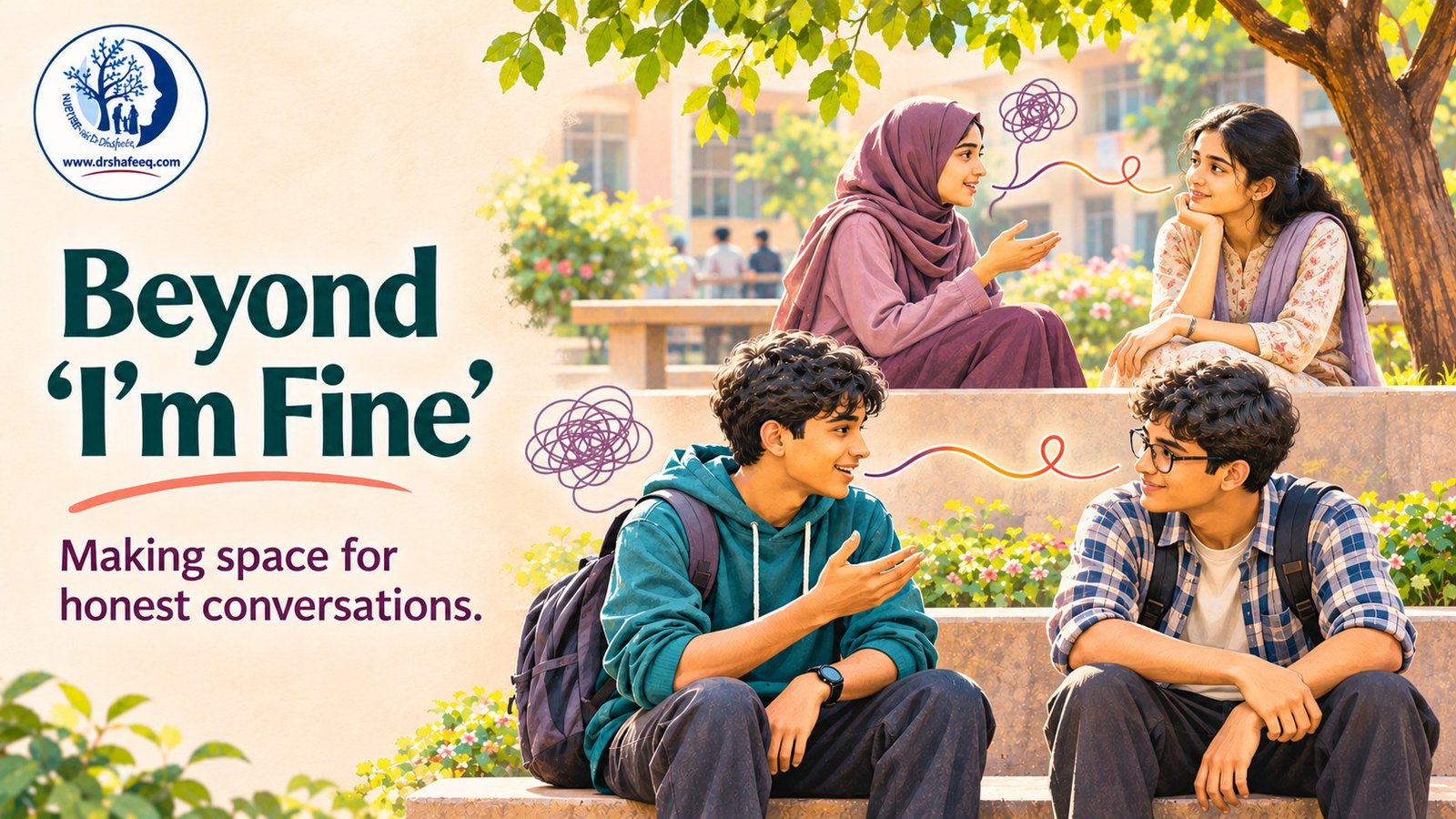
Beyond “I’m Fine”: Imaan Zara Khan’s Mission for Youth Mental Health
Through Project SAFE and her short film Unspoken, a young changemaker asks a question that matters: what happens after someone finds the courage to say they’re struggling?
By Dr.Shafeeq Ahmed
You type a message: “Can we talk?”
You stare at it. Then delete it.
Not because everything is okay, but because explaining feels harder than staying silent. What if you sound dramatic? What if someone turns it into a lecture? What if you cannot find the words?
That space between feeling something and being able to express it is at the heart of 16-year-old Imaan Zara Khan’s work. Through Project SAFE—Student Advocacy for Emotional Well-being—and her short film Unspoken, she is exploring how storytelling can help young people recognize emotional distress, talk about it and reach out for support.
Knowing the Words Is Not the Same as Finding Your Voice
You might be comfortable sharing a mental health awareness post and still struggle to tell a friend, “I’m not coping.”
You might recognize the language of anxiety, trauma and burnout without knowing how to explain why getting through an ordinary day feels difficult.
Imaan’s work focuses on this gap between awareness and expression. The emphasis is not on asking teenagers to diagnose themselves or speak in clinical terms. It is on making room for everyday honesty: “I feel overwhelmed.” “I’m tired of pretending.” “I don’t know what’s wrong, but I need someone to listen.
You should not need a perfectly worded explanation for a difficult feeling to deserve attention.
Four Different Lives. One Familiar Silence.
Unspoken follows four teenagers from different social, cultural and regional backgrounds across India. Their circumstances differ, but they share a struggle: putting their inner experiences into words.
That is where the film seeks to connect—not through a checklist of symptoms, but through recognition.
A character does not have to live your exact life to make you feel understood. Sometimes a hesitation, a difficult conversation or the effort of appearing okay can feel familiar.
The project aims to explore whether that recognition can open a door: first to understanding a feeling, then to expressing it, and eventually to seeking support. Planned school screenings are intended to help investigate those possibilities; they should not be mistaken for proof that the approach already works.
What Happens After “I Need Help”?
Encouraging someone to speak is only half the responsibility. The other half is being ready to respond.
Imagine finding the courage to say, “I’m struggling,” only to hear, “Everyone has problems.”
Now imagine being taken seriously, having someone listen without immediately judging, and knowing where appropriate support is available.
Project SAFE’s ambition extends beyond awareness to this question of response. The supplied account describes work involving research advisers associated with NIMHANS, exploring how storytelling and clearer school support pathways might help connect recognition, communication and help-seeking.
The aim is not to turn every friend into a counsellor. It is to avoid leaving a distressed student—or the friend they confide in—to figure everything out alone.
An awareness campaign can start a conversation. A dependable support system must be prepared for the answer.
Young People Are Not Just the Audience
There is another reason Imaan’s initiative deserves attention: she is not simply asking adults to talk about young people. She is contributing to the conversation herself, bringing storytelling, student experience and research questions together.
That matters without needing to portray her as the teenager who has solved mental health—or to dismiss other young people as distracted and disengaged.
Youth leadership does not have to mean having every answer. It can begin with noticing a problem that others overlook and asking a better question.
In this case: why is it still so difficult to say how we feel, even when mental health is being discussed around us?
Let “We’re Listening” Mean Something
A film cannot replace professional care. Nor should a promising initiative be judged by good intentions alone. Its value must ultimately be examined through evidence and the experiences of the students it hopes to serve.
But the ambition behind Project SAFE is worth taking seriously: move beyond telling young people to speak up, and consider what makes speaking possible—and what support follows.
For schools, families and communities, that is a meaningful challenge.
Make space for an answer that is uncomfortable, unfinished or difficult to hear. Do not demand polished language before taking someone seriously.
“I’m fine” should not be the only answer a young person feels safe giving.
And “we’re listening” should mean something after the words are spoken.
#NurtureWithDrShafeeq
Dr. Shafeeq Ahmed S.M
Pediatrician, child psychologist, parenting coach, and career & life counsellor with over 20 years of experience. Read full bio →