The Quiet Cost of Instant Connection: Rethinking Love in a Hurried World

The Quiet Cost of Instant Connection
Rethinking Love in a Hurried World
By Dr. Shafeeq Ahmed
I remember a couple who came to see me about their daughter’s ear infection. The treatment was straightforward, and we were nearly finished when the mother’s eyes filled with tears. “We did everything quickly,” she said. “We met quickly, fell in love quickly, married quickly. Nobody told us how to stay.” I have changed the details to protect their privacy, but the quiet sadness in that sentence has stayed with me.
We often speak of love as though it arrives in a moment. Yet the things that make love durable—trust, patience, understanding and a sense of responsibility—take time. In a world built around speed, relationships can begin to follow the same hurried rhythm as everything else. We swipe, match, connect and move on, sometimes mistaking the possibility of connection for the deeper work of building it. A lasting relationship is not assembled like a quick meal; it grows, gradually, through attention and care.
It would be neither fair nor honest to dismiss every change in how people understand relationships. More open conversations about consent, equality and personal dignity have helped challenge silence and protect people from harms that were once hidden. Those gains matter. But openness and freedom are not the same as emotional readiness, and choice alone cannot guarantee that a relationship will be nourishing. We can acknowledge progress while still asking what may be getting lost when intimacy is treated as casual, disposable or detached from responsibility.
The concern is not that every relationship must look alike, or that people should be shamed for their experiences. Shame rarely helps; it often teaches people only to conceal their pain. The deeper question is what happens when closeness becomes something to consume rather than something to honor. In a culture that encourages constant novelty, a person may have many connections and still feel profoundly alone. The heart needs more than access. It needs safety, respect, and the assurance that it matters beyond the moment.
As a pediatrician and someone who works with children, families and emotional wellbeing, I see how adult relationships can shape the atmosphere in which children grow. A young person may carry uncertainty into future relationships after witnessing instability. A couple may enter marriage with sincere affection but little preparation for the ordinary, demanding work of sharing a life. A child may become aware of adult conflict long before they have the emotional tools to understand it. These are not reasons to condemn people; they are reminders that the choices and patterns we normalize can ripple into homes, classrooms and the next generation.
A healthier response is not simply to demand restraint. It is to recover meaning: to understand intimacy as part of a whole human relationship, shaped by care, honesty and responsibility. In the Islamic perspective, the boundaries around intimacy are not presented merely as restrictions; they are also connected to the protection of dignity, family life and social trust. Whatever our starting point, the human question remains: does the way we relate to one another help people flourish, or leave them more vulnerable and alone?
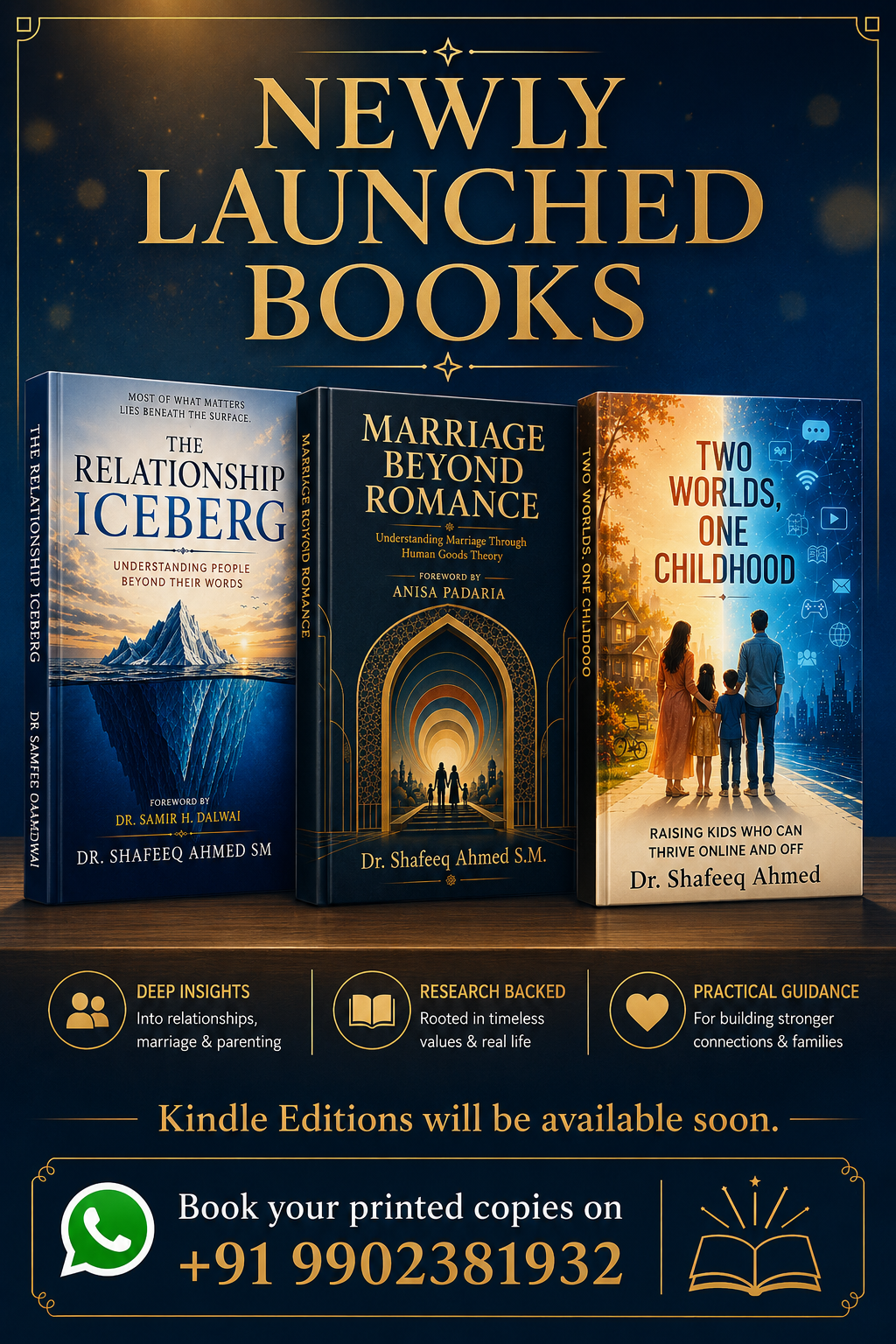
This is one of the questions explored in my book, ‘Marriage Beyond Romance: What Really Holds a Marriage Together’. Romance can be a beautiful beginning, but it cannot carry a marriage by itself. What sustains two people over the years is often quieter: listening when it would be easier to withdraw, repairing after a disagreement, keeping promises, sharing burdens and choosing kindness on unremarkable days. Love becomes dependable through the small decisions that are repeated long after the first excitement has settled.
And this may be one of the most important lessons we can offer our children—not through lectures, but through the relationships they see. Let them witness adults who apologize, make room for one another, protect each other’s dignity and work through difficulties without treating people as replaceable. Children learn commitment less from what we tell them than from what we practice, especially when no one is watching.
Perhaps what we need in this hurried world is not more connection, but more care within the connections we already have. Real closeness asks us to slow down, to see the person beyond the moment, and to remember that another heart is never a convenience. The most meaningful kind of love is not the one that moves fastest; it is the one that keeps showing up—with patience, respect and responsibility.
NurtureWithDrShafeeq
Parenting. Relationships. Perspective.

Dr. Shafeeq Ahmed S.M
Pediatrician, child psychologist, parenting coach, and career & life counsellor with over 20 years of experience. Read full bio →