Who Exactly Am I? India’s Quiet Race Against Forgetting
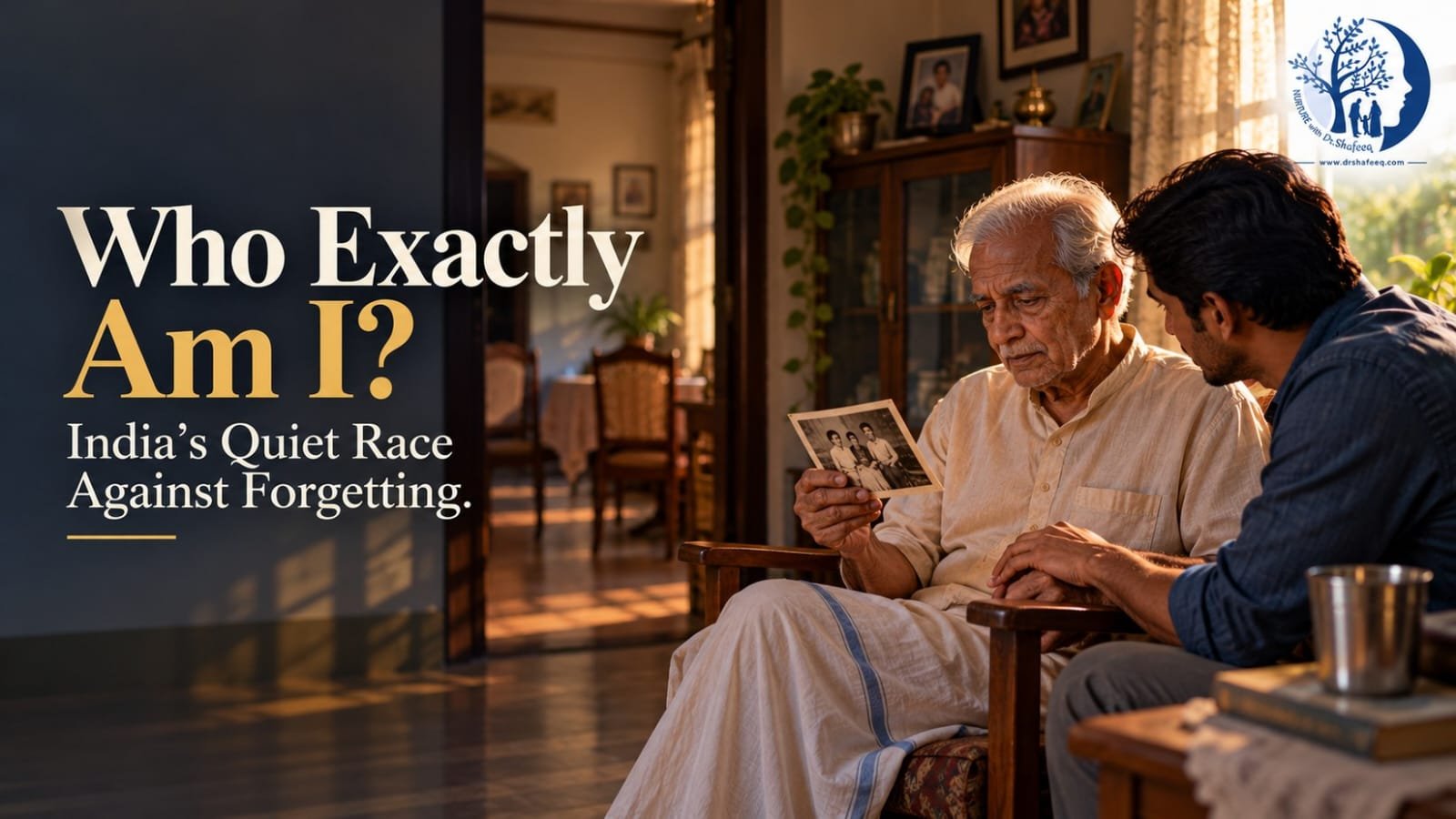
Who Exactly Am I? India’s Quiet Race Against Forgetting
We have learned how to add years to life. Now we must learn how to keep life in those years.
Dr. Shafeeq Ahmed
A Film That Puts You Inside the Fog
There is a moment in Florian Zeller’s ‘The Father’ (2020) when Anthony, played by Anthony Hopkins in an Oscar-winning role, looks up at a woman he has never seen before. She tells him she is his daughter. The furniture in his flat has moved. The light is different. Nobody is lying to him, yet nothing is true. The film never explains dementia to us; it makes us live it. By the final scene, a once-commanding man is weeping for his mother while a care worker gently decides what he will do next.
That reversal, from a person who runs his own life to a person whose life is run for him, is the real horror of dementia. And for a country growing old as quickly as India, it is no longer only a story on screen.
The Price of Living Longer
Modern medicine has been remarkably good at keeping hearts beating, infections in check and cancers at bay. What it has not yet managed is to keep the ageing brain as healthy as the body around it. The longer we live, the more of us will meet dementia, either as patients or as the people who care for them. Estimates suggest that millions of Indians over 60 already live with some form of it, and that number is expected to roughly double within the next decade or so. Many go undiagnosed, their confusion dismissed as “just old age.”
India has health missions for many urgent causes, yet dementia still lacks a focused national strategy with dedicated funding, trained staff and clear accountability. A few states have started specialized memory and brain-health clinics, but these remain islands rather than a system.
The Social Fault Lines
· The shrinking family net. We have long counted on the joint family to look after our elders. But dementia care is not a few hours of help; it can mean years of round-the-clock watchfulness. With children working in other cities or countries and households getting smaller, that net is wearing thin.
· The invisible caregiver. The work falls mostly on women: wives, daughters and daughters-in-law who quietly give up jobs, savings, sleep and their own health. Their labor rarely appears in any statistic.
· The wall of silence. We talk openly about diabetes and heart disease, but memory loss still carries shame. Families hide it, delay diagnosis and struggle alone.
The Ethical Questions We Cannot Avoid
· Safety or freedom? Locked doors prevent wandering, but they also turn a home into a cage. A well-run facility can still strip a person of every small choice: when to eat, when to sleep, whom to see. How do we protect someone without erasing them?
· Who speaks for the person who forgets? When judgement fades, decisions about money, treatment and living arrangements pass to others. Without advance directives and fair guardianship rules, these choices can become sources of conflict or even exploitation.
· Care for the rich, neglect for the rest? Newer treatments can slow decline modestly, and quality care homes exist, but both are expensive. Dignity in old age should not depend on a bank balance.
· The fear of being a burden. Many elders dread becoming a weight on the people they love more than they dread death itself. A humane society must make sure no one feels their life has lost its worth.
Prevention: What the Evidence Points To
Not all dementia can be prevented, but research suggests that a significant share of risk is linked to factors we can influence across a lifetime:
· Move every day. Regular physical activity, even brisk walking, improves blood flow to the brain.
· Guard your heart to guard your mind. Keep blood pressure, blood sugar and cholesterol in check; what harms the arteries harms the brain.
· Keep learning. Reading, new languages, music, puzzles and new skills build “cognitive reserve.”
· Stay connected. Loneliness and isolation are real risk factors. Friendship is medicine.
· Protect hearing and vision. Untreated hearing loss is one of the biggest changeable risks; get checked and use aids early.
· Sleep well, eat well. Aim for regular, deep sleep and a diet rich in vegetables, pulses, nuts and whole grains.
· Avoid smoking and alcohol, protect your head. Wear helmets and seatbelts; head injuries raise long-term risk.
· Breathe cleaner air and manage stress and depression. Both affect brain health more than we once believed.
At the policy level, India needs early memory screening in primary health centers, paid support and training for family caregivers, affordable day-care and respite centers, legal tools for advance care planning, and public campaigns that replace stigma with understanding.
A Word to the Younger Generation
Your brain at 75 is being shaped by your habits at 25. Every late-night scroll that steals sleep, every skipped workout and every friendship you let fade adds up. So does every book you finish, every walk you take and every evening you spend laughing with people you love. Look after your mind the way you would look after your savings: early, steadily and with patience. And when you visit grandparents who repeat their stories, listen as if it’s the first time. Patience is the first form of care, and one day you may need it too.
The Last Scene
‘The Father’ closes with Anthony asking a question no one can answer for him: who exactly am I? An ageing nation will have to answer a version of that question for itself. A society is measured by how it treats those who can no longer remember. India still has time to plan before it forgets.

Dr. Shafeeq Ahmed S.M
Pediatrician, child psychologist, parenting coach, and career & life counsellor with over 20 years of experience. Read full bio →