Give Children Roots, Not Just Riches
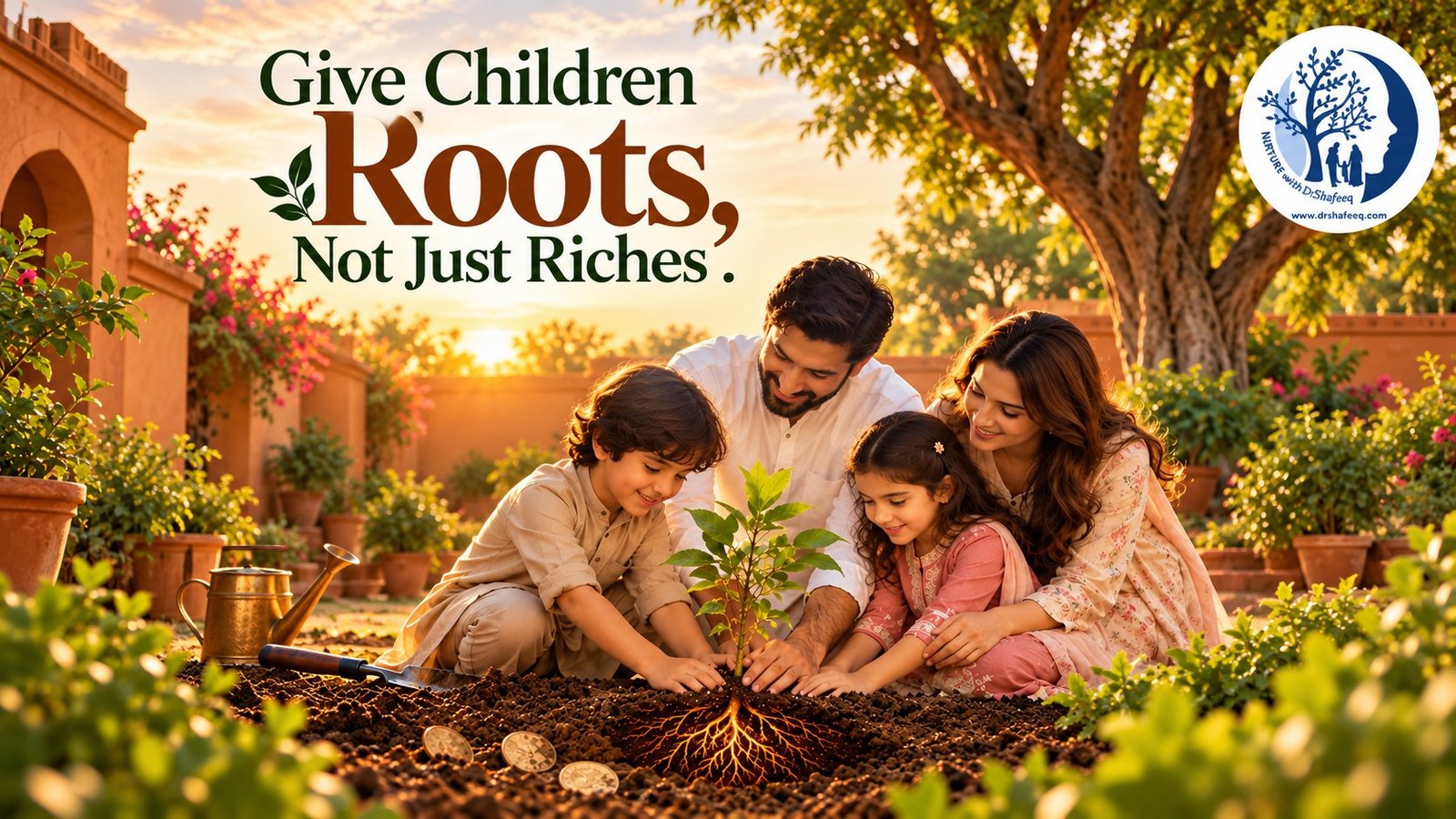
Give Children Roots, Not Just Riches
Why the greatest inheritance is the person your child becomes
By Dr. Shafeeq Ahmed
“A capable child will build their own wealth; an incapable child may squander even a great inheritance.”
Many of us carry a quiet promise in our hearts as parents. We work long hours, we save, we sacrifice, and somewhere in all of it is the hope that our children will never have to struggle the way we did. A house, a business, a piece of land, a healthy bank balance. These feel like the truest expressions of love we can leave behind.
And they are expressions of love. But they are not guarantees. No property deed has ever taught a young person how to make wise choices, and no inheritance has ever arrived with the patience and discipline that built it. So perhaps the question worth sitting with is not how much our children will inherit, but who our children will become.
Wealth Can Be Inherited. Wisdom Must Be Learned.
An inheritance transfers ownership. It does not transfer judgment. A child may receive a thriving business without ever understanding its customers, a valuable property without knowing how to care for it, or access to money without having learned the difference between a genuine need and a passing desire.
Picture two children receiving exactly the same inheritance. One holds it as a responsibility, curious about how it was built, careful to protect its value, and thoughtful about how it might serve the generations still to come. The other sees it as permission to spend without limits. The amount is identical. The outcome could not be more different. What separates them is not money but attitude, because money can open doors, but it is character that decides what a person does once they walk through them.
Raise Capable Children, Not Merely Comfortable Ones
Every loving parent wants to shield their child from pain. That instinct is beautiful, and it comes from the deepest place in us. Yet there is a meaningful difference between protecting a child from harm and protecting them from every inconvenience. When we solve every problem, meet every demand, and quietly erase every consequence, we take away the very experiences through which responsibility is learned.
Capability is rarely built in grand moments. It grows in ordinary ones. It grows when a child saves up for something instead of receiving it immediately, when they finish a task long after the excitement has faded, when they own up to a careless decision rather than being rescued from it. It grows when they learn to look after their belongings instead of expecting instant replacements and when they begin to notice and respect the people whose quiet effort makes daily comfort possible.
None of this means making childhood harder than it needs to be. It simply means allowing children to discover, gently and gradually, that effort matters, that choices carry consequences, and that comfort always comes with responsibility. A loving home can hold both generosity and boundaries at the same time. In fact, the most loving homes usually do.
Tell Them the Story Behind the Money
Children often see what a family owns without ever seeing what it cost. They see the shop, but not the years of uncertain sales. They see the house, but not the purchases that were postponed again and again. They see the successful business, but not the mistakes, the sleepless nights, and the difficult decisions that held it together.
Sharing this history is a gift, as long as we share it the right way. The message is never “You owe us because we struggled.” The message is “What you enjoy today was built through effort, and caring for it will take effort too.” That small shift changes everything. Guilt demands obedience. Understanding invites responsibility. One makes a child feel indebted; the other makes them feel entrusted.
Capability Is More Than Earning Money
Here we must be careful, because a person’s worth can never be measured by their wealth. A teacher, a caregiver, an artist, or an honest worker may live modestly and still lead a deeply capable and meaningful life. Illness, disability, limited opportunity, and circumstances beyond anyone’s control can all shape a person’s ability to earn, and none of these diminish their value.
So when we speak of raising capable children, we mean something richer than financial success. We mean sound judgment, integrity, practical skills, resilience, and a willingness to contribute. And we should remember that a young person who stumbles, even one who wastes an inheritance, is not defined by that mistake forever. People learn. People grow. People build better habits. Our task is not to label children as worthy or unworthy but to help them become responsible with whatever resources and opportunities life places in their hands.
Let Inheritance Be a Foundation, Not a Substitute for Purpose
There is nothing wrong with leaving wealth to our children. An inheritance can provide a home, fund an education, help someone begin a business, or offer stability through a difficult season. That is a blessing worth working for.
The trouble begins only when we expect money to do the work of parenting. Property cannot teach humility. A bank balance cannot supply purpose. Even the most expensive education cannot replace a genuine willingness to learn. The healthiest ambition, then, is not “My children should never need to work.” It is “My children should be able to build meaningful lives, whether or not they ever receive my wealth.” That vision leaves room for both support and independence so that our children can stand on our achievements without mistaking them for their own identity.
The Legacy That Lasts
A capable child may build wealth of their own. An unprepared child may exhaust what took generations to gather. The lesson is not that inheritance is useless, only that inheritance alone is never enough.
So leave your children assets if you can, but also help them develop the judgment to manage them. Give them opportunities, but let them learn the effort it takes to use those opportunities well. Offer them security, but never confuse dependence with protection.
Because the finest legacy is not something our children hold in their hands. It is something they carry in their hearts: the ability to create, the discipline to preserve, and the generosity to share. Give them riches if you are able. But above all, give them roots.
If this message resonated with you, share it with a parent who is building a future for their child, and follow NurtureWithDrShafeeq for more reflections on raising grounded, confident, and capable children.
Dr. Shafeeq Ahmed S.M
Pediatrician, child psychologist, parenting coach, and career & life counsellor with over 20 years of experience. Read full bio →