Breaking the Cramming Trap: Why India Needs an Education System Built for Employability
Breaking the Cramming Trap: Why India Needs an Education System Built for Employability
Dr.Shafeeq Ahmed
Picture a crowd of umbrellas stretching as far as the eye can see, rain falling steadily, and beneath them thousands of young people holding placards with exam years and results scrawled across them. It's a scene that has become disturbingly familiar in India — not a celebration, but a protest. Behind every one of those umbrellas is a story of years spent memorizing formulas, dates, and model answers, chasing a rank that was supposed to guarantee a future. For too many, it hasn't.
This is the cramming trap: a system where rote-learning and an unchecked coaching culture have quietly replaced real education, and where degrees are piling up faster than the jobs that are supposed to come with them.
The Paradox We're Living
India adds millions of graduates to its workforce every year, yet employers across sectors continue to say the same thing — they cannot find enough people who are actually ready to work. This is not a contradiction; it is the predictable result of an education culture that rewards recall over reasoning, and marks over mastery. A student can top an exam by memorizing a textbook cover to cover and still not know how to troubleshoot a machine, write a professional email, manage a small budget, or work confidently in a team. Rote learning produces excellent test-takers. Employability requires something else entirely.
What the Coaching Culture Is Really Costing Us
Walk through any coaching hub in the country and you will see the same thing: teenagers spending twelve, fourteen hours a day drilling practice papers, families spending their savings on tuition fees, and an entire adolescence organized around a single exam date. The promise is a secure future. The reality, for a large share of these students, is burnout, debt, and a skillset narrowly built for passing tests rather than solving problems.
This is not an argument against ambition or hard work. It is a warning about what happens when an entire generation is taught that memorizing the “right answer” matters more than understanding the question. The workplace does not hand out question papers with a fixed marking scheme. It hands out ambiguity, and rewards people who can think, adapt, and apply.
Skill-Based and Vocational Training: The Way Forward
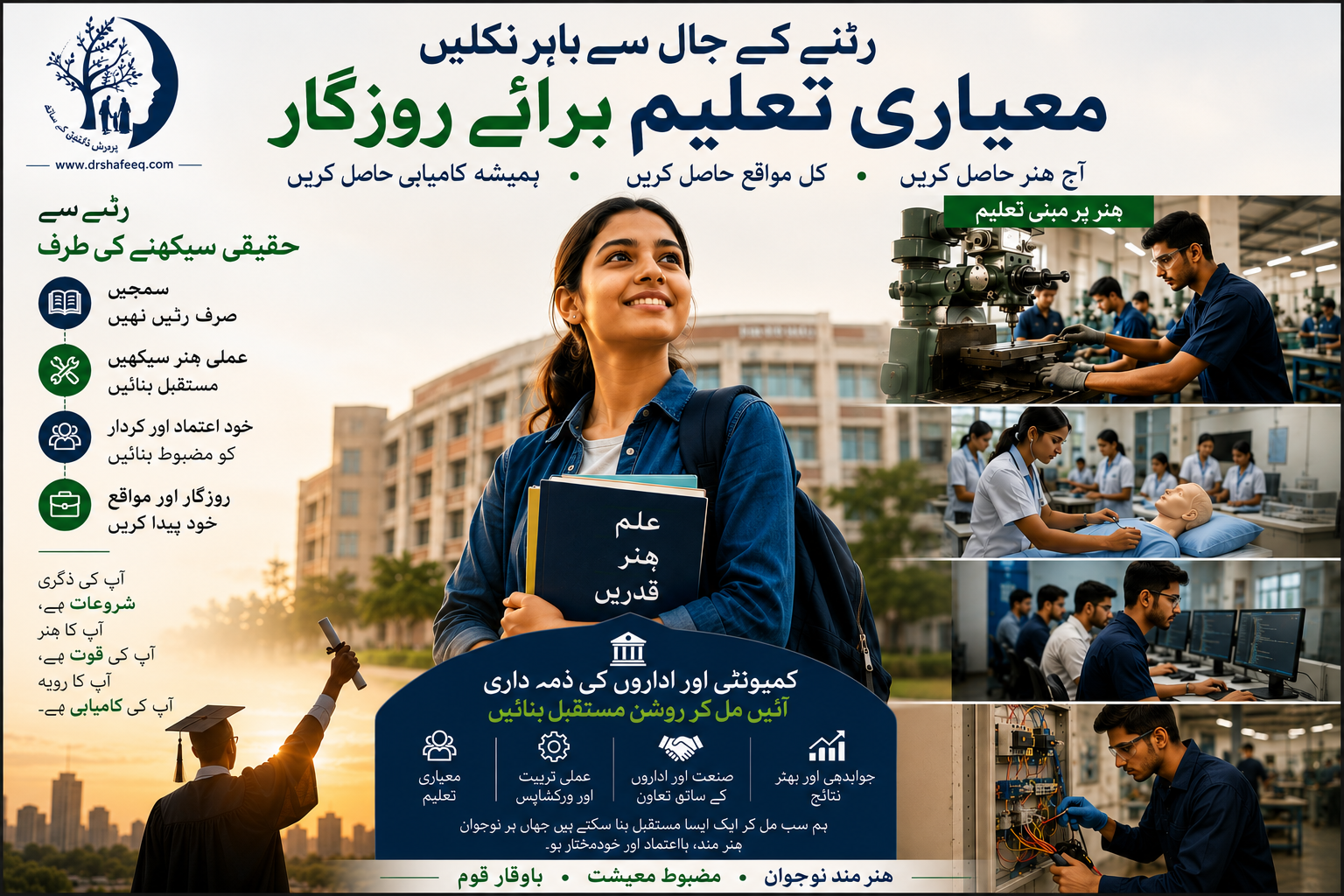
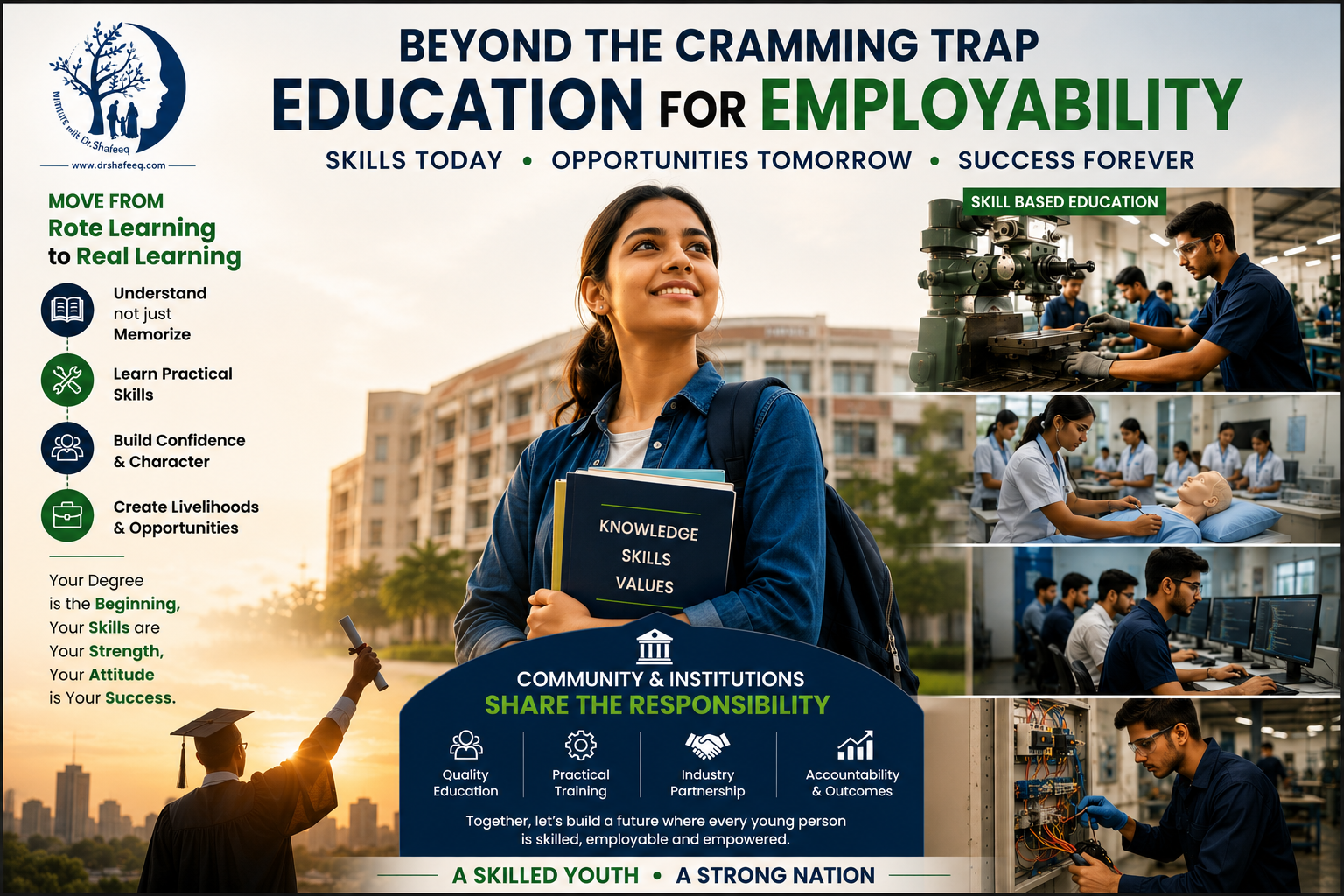
If rote learning is the trap, skill-based and vocational education is the way out of it. A plumber, an electrician, a certified nurse assistant, a computer hardware technician, a food-processing technician, or a skilled machinist walks into the job market with something a purely academic degree often cannot offer: a demonstrable, immediately useful capability.
India already has the building blocks for this shift — Industrial Training Institutes, polytechnics, apprenticeship programmes, and national skilling missions. What they need now is investment, quality control, and above all, respect. As long as vocational training is treated as a fallback option for students who “couldn't make it” academically, we will keep pushing talented young people toward degrees that lead nowhere, instead of trades that lead somewhere. Skill-based education must be positioned as a first choice, not a last resort — backed by curricula that are co-designed with industry, updated as technology changes, and connected directly to real hiring pipelines through structured internships and apprenticeships.
Accountability Cannot Stop at the Ministry
It is easy to point at policy and demand reform from the top. But the cramming trap is sustained just as much by decisions made at the community level, and community institutions must be willing to be held accountable for their part in it.
Schools and School Management Committees are responsible for the quality of teaching in the classroom, not just the results on a mark-sheet — and they must be answerable when infrastructure, teacher training, or basic learning outcomes are neglected. Local governing bodies — panchayats and municipal education committees — control the budgets and oversight that determine whether a village school gets a functioning science lab or a skill-training center; that responsibility cannot be treated as optional. Coaching institutes, which now shape the aspirations of millions of young people, owe their students honesty about outcomes instead of marketing built on fear and false promises. Employers and industry bodies have a duty to partner with local training institutions, offer real apprenticeships, and stop treating skilling as someone else's job. And parents and communities themselves have a role in this: measuring a child's worth by a single exam rank, rather than by curiosity, resilience, and real ability, keeps this entire system alive.
None of these institutions can fix the problem alone, and none of them get to opt out of responsibility for it either.
A Generation Worth Investing In
Change rarely begins with a national policy announcement. It begins with a village school that decides to open a computer lab, a panchayat that funds a tailoring or electronics course alongside the local school, a coaching Centre that starts teaching communication and problem-solving skills alongside exam shortcuts, and a student who chooses to understand a subject rather than simply memorize it.
India's young people are not short on ambition, discipline, or talent — the crowds of umbrellas prove that every single year. What they need is an education system, and a community willing to measure their worth by what they can actually do, not by how well they can recall it on one given day. Building that system is not someone else's job. It starts with every school, every institute, every local body, and every family choosing to be accountable for the future they are preparing their children for.
The exam season will end. The rain will stop. What we do about employability, starting now, is what will decide whether the next generation stands under those umbrellas in protest — or walks confidently into work they are genuinely prepared for.
www.drshafeeq.com

Dr. Shafeeq Ahmed S.M
Pediatrician, child psychologist, parenting coach, and career & life counsellor with over 20 years of experience. Read full bio →