We Told Every Child to Learn to Code. The Plumber Had the Last Laugh.

We Told Every Child to Learn to Code. The Plumber Had the Last Laugh.
The real advantage was never the specific job title — it was always the willingness to keep training.
Dr.Shafeeq Ahmed
A graphic has been doing the rounds lately, shared as a joke. It lines up the “safest jobs” of 2020, web developer, WordPress developer, Java developer, app developer, software engineer, UI/UX designer, graphic designer, against the “safest jobs” of 2026, plumber, electrician, AC repair technician, mechanic, carpenter, welder, painter. People share it for a laugh. Sit with it for a moment as a career counsellor, though, and it stops being funny and starts reading like a warning about how badly an entire generation was advised.
In 2020, the safest, smartest thing any parent, teacher, or career counsellor could tell a bright teenager was to learn to code, get into web or app development, train as a designer, ride the digital wave. It was not bad advice at the time. The wave was real. What almost nobody accounted for was how quickly generative AI would learn to write serviceable code, design competent interfaces, build a functioning website, and draft a usable logo, faster and cheaper than the very graduates who had just spent three or four years training to do exactly that. The jobs have not vanished entirely, but the safety, the assumption that simply entering the field would protect you, evaporated far faster than career guidance had priced in.
Meanwhile the plumber, the electrician, the AC technician, the mechanic, the carpenter, the welder, the painter, trades an earlier generation of Indian parents often steered a talented child away from, telling them it was a fallback for those who could not do better, turned out to be exactly what artificial intelligence still cannot reach into. No algorithm has crawled under a sink at midnight to trace a specific leak in a specific pipe in a specific house. No model has rewired a fuse box that some previous electrician wired wrong twenty years ago. These trades demand an embodied, situational judgement, hands that have felt a hundred versions of the same problem and can tell instantly which one this is, that remains stubbornly, reassuringly human.
The real lesson here for career counselling is not “become a plumber instead of a developer.” It is that the entire premise behind how we have been giving career advice needs to change. We have spent a decade telling young people to chase whichever field looks safest and most in demand right now, as though the answer, once found, would stay true for an entire working life. That premise is now visibly false. What career guidance should actually teach is a way of evaluating any path by how much of it depends on something a machine can eventually imitate versus something rooted in physical presence, real-time judgement, and direct human trust, and just as importantly, it should be teaching the disposition to keep learning and re-skilling for its own sake, because even the trades on the safer side of that graphic will keep changing. The electrician of 2030 will be wiring EV chargers and smart-home systems that barely existed a few years ago. The real advantage was never the specific job title. It was always the willingness to keep training.
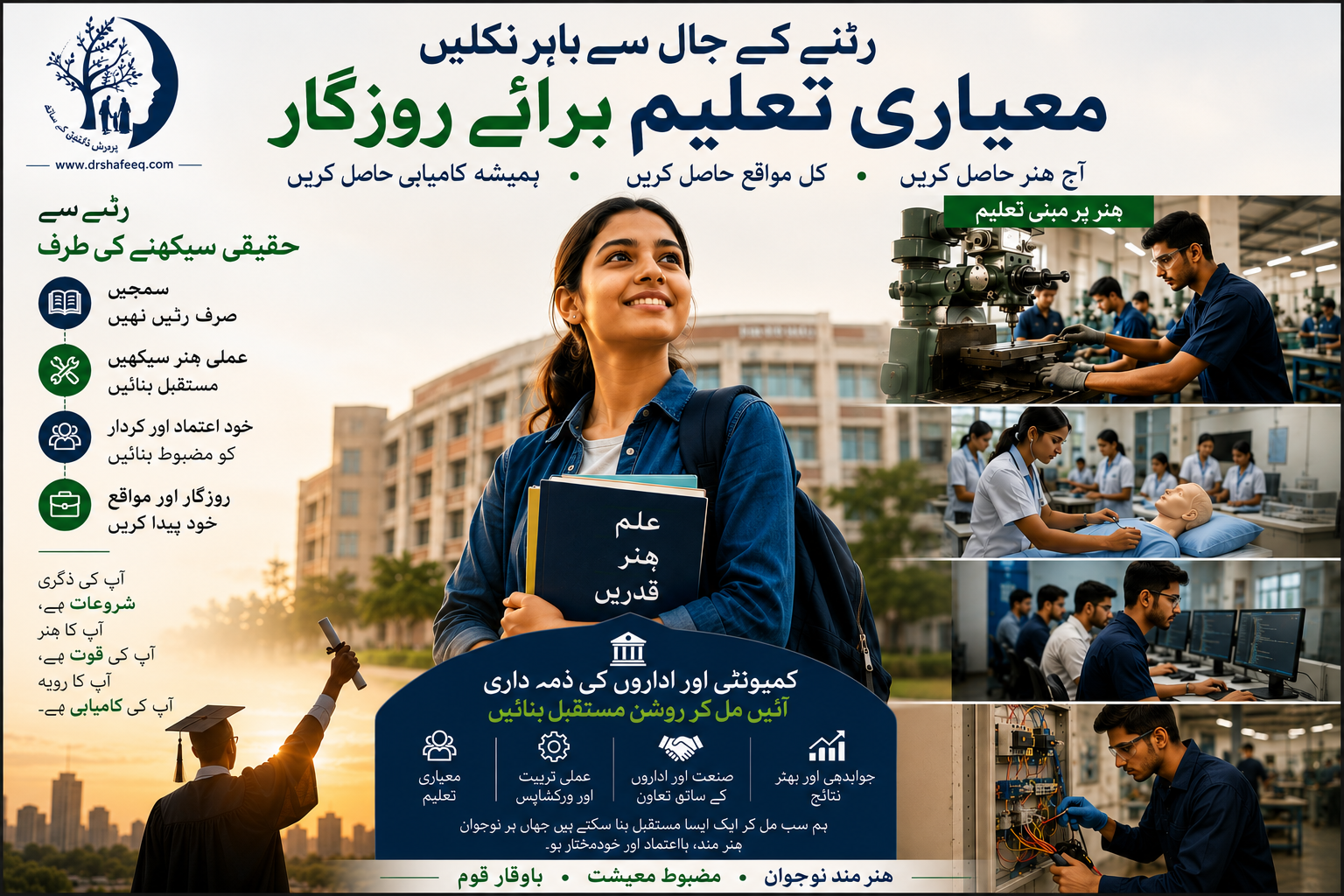
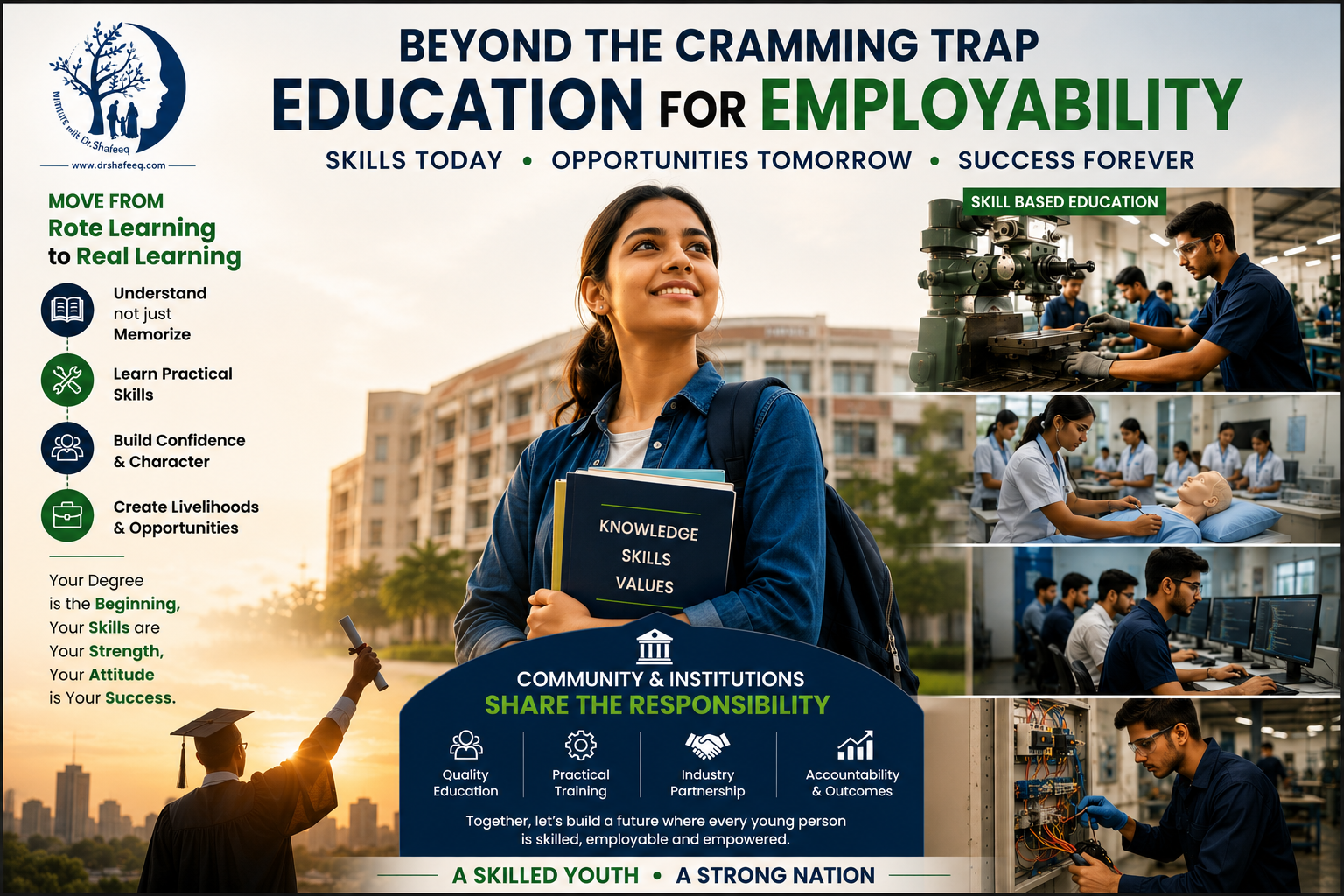
This is also exactly why skill-based, vocational courses deserve a completely different standing in how we counsel students than they have traditionally had. For too long, in too many households, a polytechnic diploma, an ITI certificate, or a hands-on trade apprenticeship has been treated as the option you settle for once the real degree does not work out. That hierarchy was already unfair to students who are genuinely gifted with their hands and their spatial reasoning rather than with an exam paper. It is now also economically out of date. A well-trained electrician or paramedical technician graduating today walks into a labor market with real, immediate, and comparatively AI-resistant demand, while plenty of graduates from more prestigious-sounding four-year programmes are discovering their first job no longer exists in the form they trained for.
This is precisely the gap I have been trying to help close through a new vocational training venture I am building, one designed to give students a genuine, respected, and rigorously trained pathway into exactly these in-demand, hands-on fields, alongside a parallel paramedical institute for allied health careers that carry the same durability. Career counselling has to stop treating these as consolation prizes and start presenting them, honestly, as one of the more strategically sound choices a student can make right now.
If you are guiding a child, or you are the student standing at that crossroads yourself, the question worth asking is not what looks hot right now. It is what a path actually requires of a human being that a machine still cannot do, and whether you are building the kind of adaptable skill that survives the next six years, not just the ones we have already seen. That is a harder question than reading a viral graphic, but it is the only one actually worth asking.
www.drshafeeq.com
Dr. Shafeeq Ahmed S.M
Pediatrician, child psychologist, parenting coach, and career & life counsellor with over 20 years of experience. Read full bio →