Freedom Without a Compass: The Quiet Crisis of Gen Z
Freedom Without a Compass: The Quiet Crisis of Gen Z
By Dr. Shafeeq Ahmed
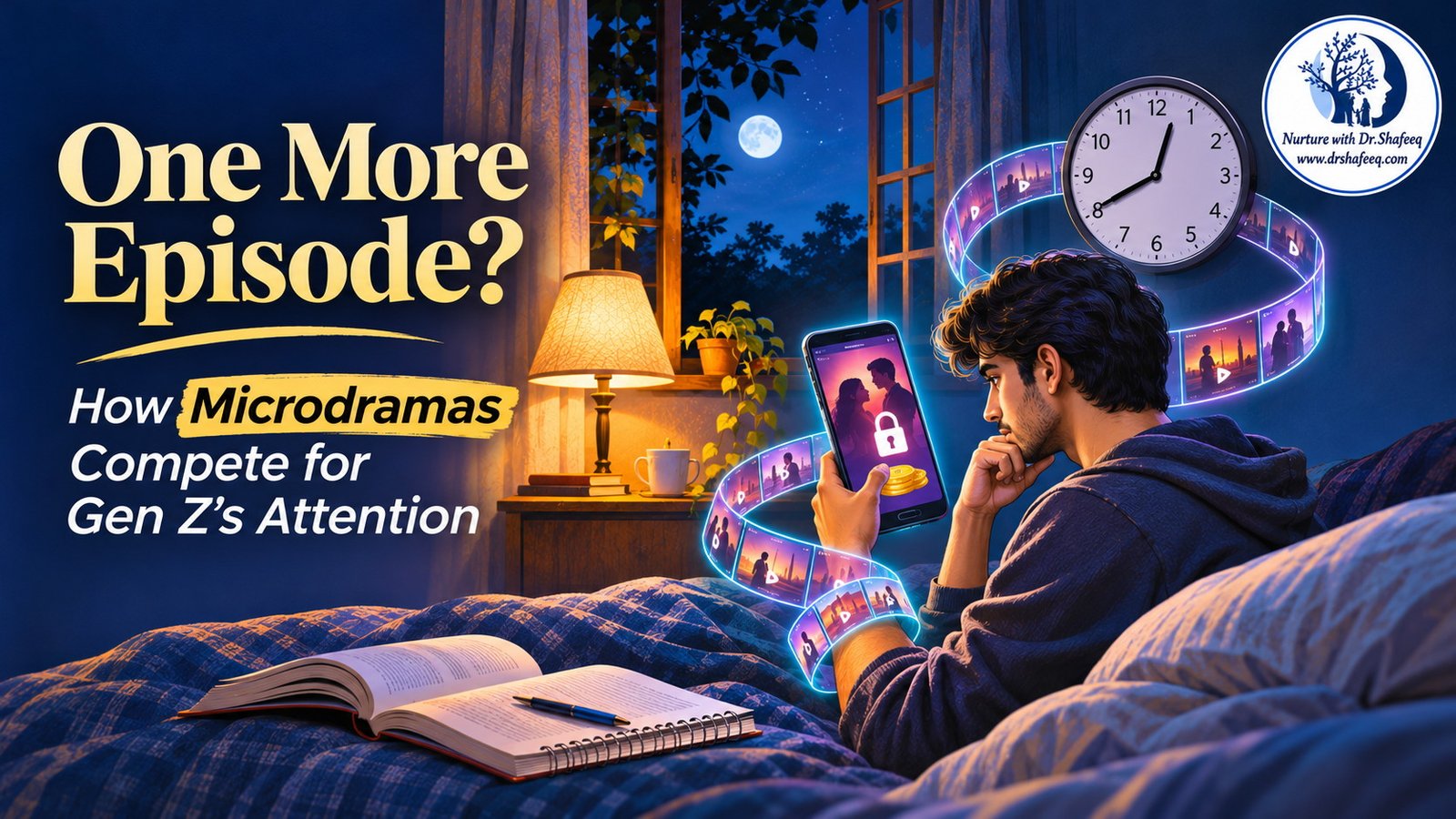
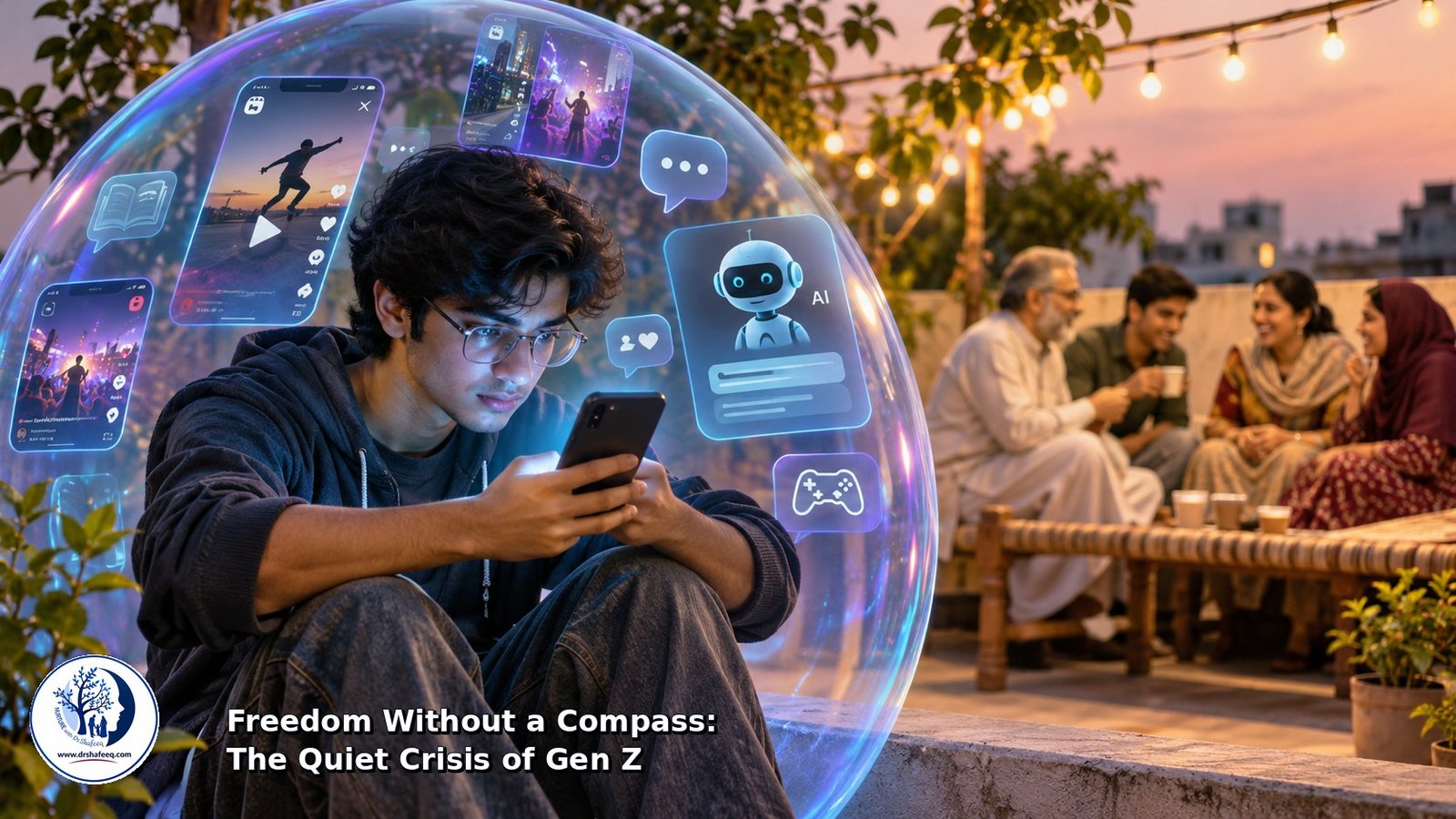
Watch a young person scroll late into the night and you may feel uneasy, as if a generation is being designed rather than simply growing up. There is no secret plot. But markets, media, platforms and algorithms together shape much of what young people see, admire and desire. The real question is not "What is wrong with Gen Z?" but "What kind of world are we building around them?"
A World Made to Order
In many Indian homes, elders once had a say in what you studied, whom you befriended and even whom you married. Modern individuality has brought real gains: dignity, privacy and the right to shape one's own life. The trouble begins when the right to privacy slowly becomes a feeling that other people are unnecessary. A teenager in Bengaluru or Lucknow can now assemble a whole world on a screen, keep what pleases and mute the rest. That is freedom, but also a quiet risk. Real life rarely cooperates. Parents disappoint, friends let us down and society does not bend to our wishes. Yet waiting, losing and hearing "no" are how patience, empathy and maturity are formed. A person shielded from every outside limit but ruled by every craving is not free; the chains have simply moved inside.
More Choices, Less Control
The old question was "Who is stopping me?" The new one is "Who is shaping what I want?" Desire has always been influenced by family, culture and markets, but today that influence is constant, personal and data-driven, and our attention itself is bought and sold. Freedom means no one forces you; self-mastery means you understand what moves you and can tell a need from a want. Sometimes the freest act is to wait, stay silent or say "no".
Keep a Room of Your Own in Your Mind
Being able to do something does not make it right. Artificial intelligence can supply information, but not wisdom. Imagine a student in Hyderabad who lets an AI tool write every assignment: the marks arrive, but the thinking never happens. Questioning, erring, failing and trying again are how a mind grows. Used well, AI is a remarkable tutor; used carelessly, it becomes a crutch. The real question is whether AI remains a tool of the mind or turns the mind into its tool.
When Company Becomes Content
AI companions can listen, remember and respond warmly at any hour. For a lonely young person, that may feel like friendship. But a pleasing reply is not love, and constant availability is not commitment or sacrifice. As machines grow more convincing, we must ask whether love needs another human being, and what our answer means for marriage, family and friendship. Debates on identity, too, deserve care and compassion; beneath many of them lies one shared assumption, that the individual alone is the final author of life.
We Are Not Only "I"
We are also sons and daughters, parents, friends, neighbours and, for believers, servants of our Creator. These bonds do not shrink freedom; they give it meaning. Without the other person there is no love, responsibility, sacrifice or justice. That is why humanity's central question has never been "What can I do?" but "What should I do?" Happiness, too, is larger than pleasure. Some of our deepest joys come from serving others or keeping a hard promise. Comfort spares us difficulty; training teaches us to face it.
Some Limits Make Us Human
Some limits enslave, but others shape our humanity. Time teaches priorities, mortality makes life precious, our bodies keep us grounded and other people's freedom teaches responsibility. Our age dreams of longer lives, enhanced bodies and self-designed identities. Whether or not these dreams come true, one question grows urgent: is removing every limit really freedom?
A Mirror, Not a Culprit
Gen Z is not the problem; it is a mirror of our age. If loneliness is sold as entertainment and connection is reduced to contact, the young cannot carry the blame alone. Families, schools, communities and media must look honestly at themselves. There is real hope: this generation questions, learns fast and crosses cultures with ease. With the right direction, these are great strengths. What young people need is an upbringing that builds inner judgement, teaching that "I want it" is not a moral argument and that what is possible is not always good.
Real freedom is not a life without limits. It is mastering our desires, owning our actions, honouring others and knowing why we live. Will we remain masters of the world we have built, or end up searching inside it for the meaning of our own existence?
#NurtureWithDrShafeeq
Dr. Shafeeq Ahmed S.M
Pediatrician, child psychologist, parenting coach, and career & life counsellor with over 20 years of experience. Read full bio →