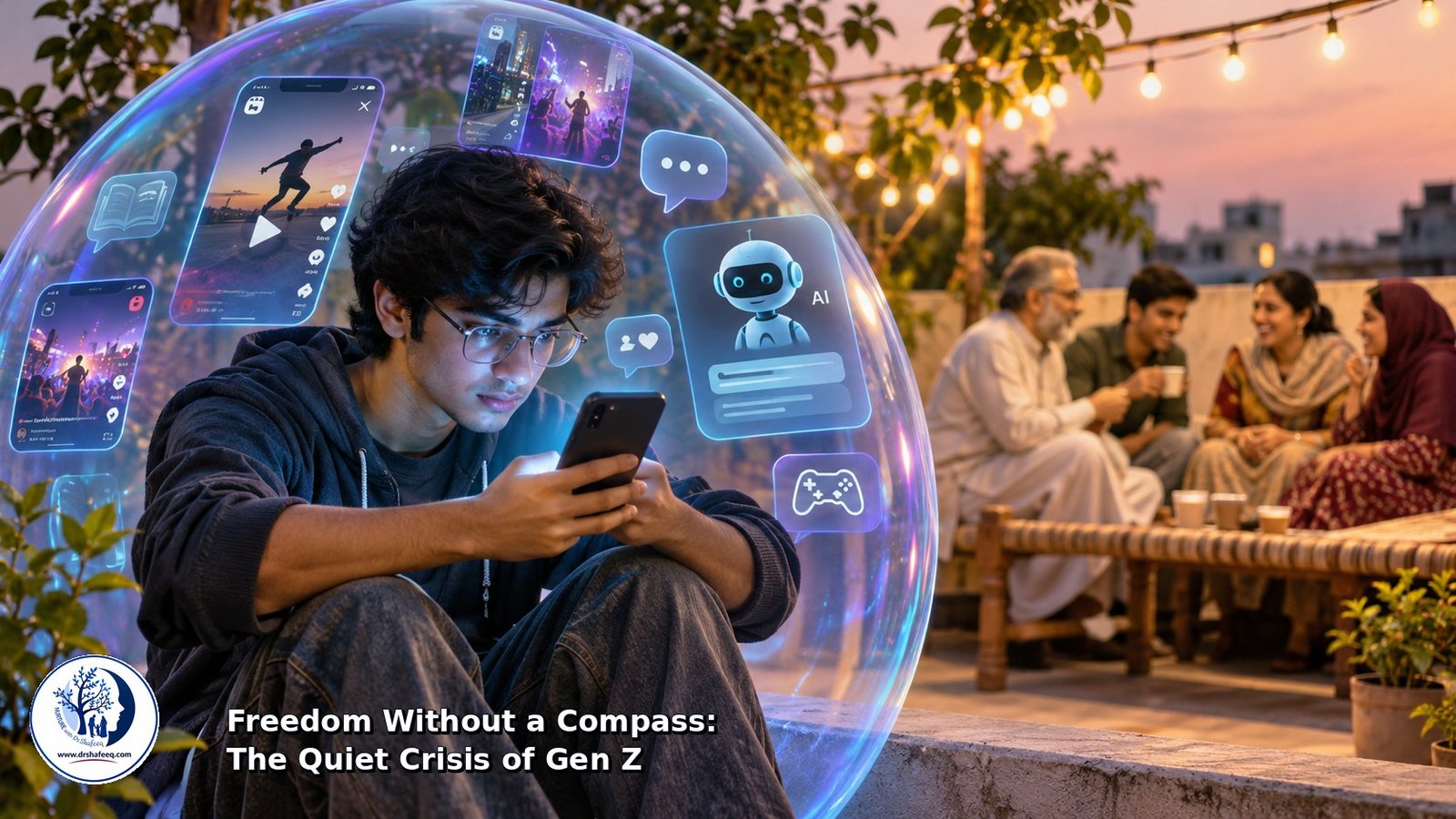
One More Episode?: How Micro dramas Compete for Gen Z’s Attention
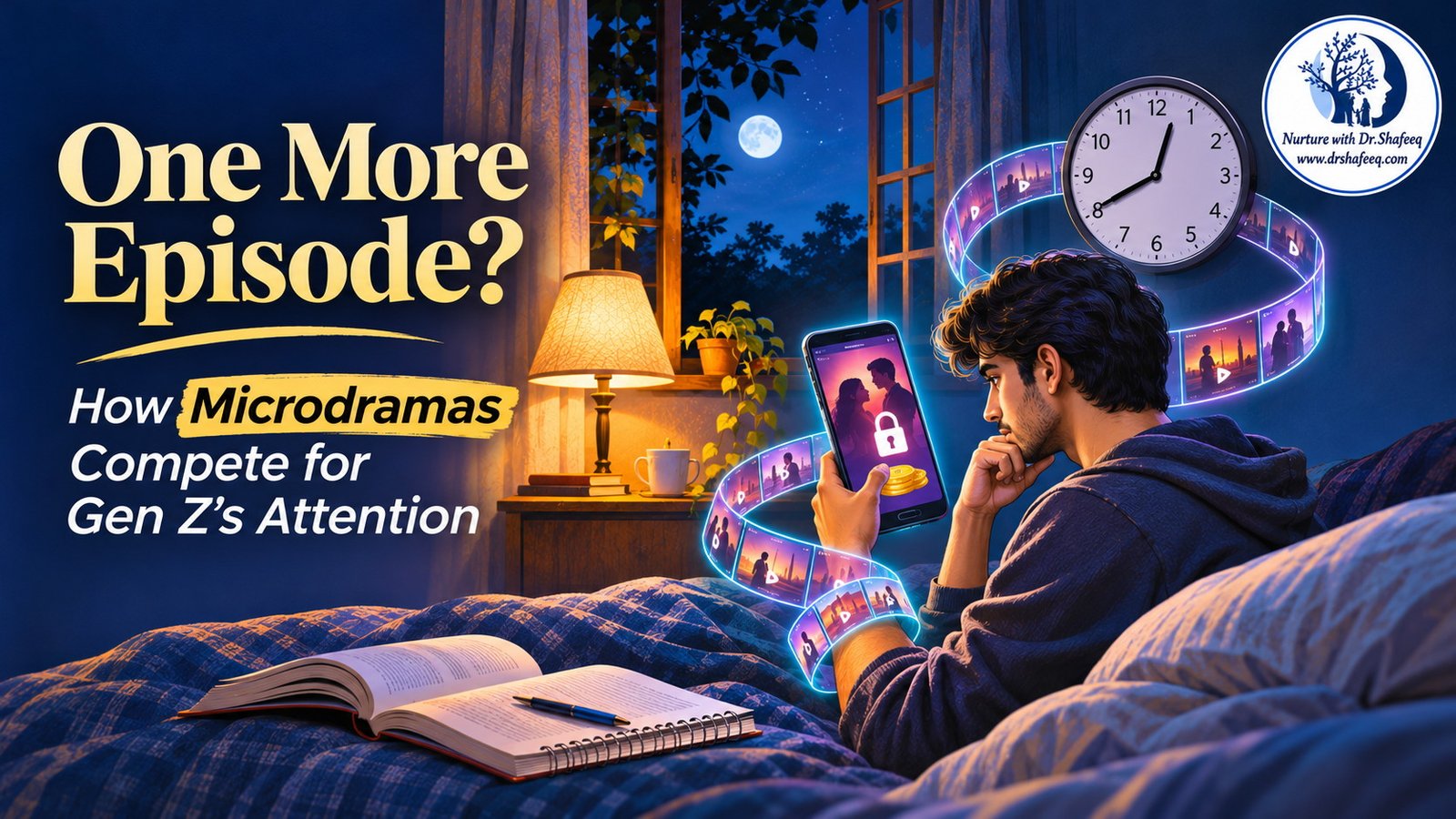
One More Episode?: How Micro dramas Compete for Gen Z’s Attention
By Dr. Shafeeq Ahmed
It starts innocently. You finish a chapter, an assignment or a long day at work. You pick up your phone and tap on a micro drama. In 90 seconds, there is a secret heir, a betrayal and a slap. Then the screen freezes on a cliffhanger.
Episode 12 is locked. Pay a few rupees to continue?
You tap. Then you tap again. Forty minutes later, it is past midnight, and the plan for an early start is gone.
This is not a story about lazy young people. It is about very clever product design, and why attention is one of the most valuable things a young person, a workplace and a country have.
The 90-Second Soap Opera Goes Mainstream
Micro dramas are vertical, serialized stories with episodes of one to two minutes. Their growth has been remarkable. Lumikai’s State of India Interactive Media Report 2025 estimates that the market reached about $300 million in its first year and could grow to $4.5 billion by 2030, with roughly 100 million monthly users. Redseer projects growth from about ₹2,300 crore in FY26 to ₹23,500–25,500 crore by FY32.
The viewing is even more striking. Redseer estimates that Indians watched about 800 million episodes a day in June 2026, up from 220 million in October 2025. At about 1.4 minutes per episode, that comes to roughly 2,100 years of content every day.
AI is speeding up production. ShareChat’s parent, Mohalla Tech, says its AI-assisted workflow makes a series about 40% more cheaply than a live-action shoot and targets a 70% reduction. EloElo, the parent of Story TV, raised $80 million in a round co-led by Hornbill Capital and NBCUniversal, reportedly valuing it at $500 million. Its founder says AI now drives 70–75% of its workflow.
For investors, this is a mobile success story. For the rest of us, it raises a quieter question: what happens to our ability to focus?
The Cliffhanger Is the Business Model
Micro dramas are not designed to be finished. They are designed to be continued. Typically, the first episodes are free, and then a paywall appears at the most tense moment, with the next instalment costing as little as ₹5–10.
Small payments feel harmless, which is exactly why they work. In Meta and Ormax Media’s research, 32% of viewers who had paid said they would pay a small amount to unlock the next episode, and 53% of users reported anxiety about subscription auto-renewals.
The same research shows when the habit happens: viewing peaks between 8 pm and midnight, mostly alone at home, spread across several short sessions. That suggests the bigger cost may not be stolen office minutes. It may be lost sleep, lost study time and a lost evening.
What the Research Says, and What It Doesn’t
The evidence deserves honesty rather than alarm.
A 2025 meta-analysis in Psychological Bulletin, covering 71 studies and more than 98,000 participants, found that heavier short-form video use was associated with poorer attention and inhibitory control, as well as higher stress and anxiety. These are associations, not proof that short videos cause the problems. Distracted or stressed people may also be drawn to them. The review did not study micro dramas specifically.
Research on work focus adds another layer. Sophie Leroy’s studies show that when we switch tasks before finishing one, part of our attention stays behind. She calls this “attention residue”, and it lowers performance on the next demanding task. A cliffhanger is, by design, an unfinished story.
Breaks matter too, though the findings are mixed. One Rutgers experiment found that participants who took breaks on their phones solved 22% fewer problems afterwards than those who took other kinds of breaks. A more recent study found no performance difference, although phone breaks did improve mood. The honest conclusion is that a phone break is not automatically harmful, but it is not automatically restful either.pubmed.ncbi.nlm.nih+1
Why This Matters Beyond the Individual
India’s future depends on young people who can concentrate for long stretches: to code, diagnose, research, build businesses and solve hard problems. If millions of them gradually trade sleep, study and reflection for endless cliffhangers, the cost will not appear on any platform’s balance sheet. It will show up quietly, as tired mornings, rushed work and ideas that never get developed.
None of this makes micro dramas the enemy. They provide entertainment, regional-language stories and work for writers and actors. The concern is not their existence. It is whether we use them by choice or are used by their design.
Taking Back Attention
For students and young professionals
Decide before you start: “Two episodes, then stop.” Notice how the paywall is designed to change your mind.
Keep the phone out of the bedroom after a set time, especially on study or work nights.
Take some breaks without a screen: a walk, a stretch or a conversation.
When you leave a task, jot down where you stopped and what comes next. Leroy’s research shows this “ready-to-resume” note helps the mind let go.
For colleges and training institutes
Teach focus as a skill, not a personality trait.
Help students understand how cliffhangers, coins and recommendation systems shape behavior. Once you can see the design, it loses some of its pull.
For workplaces
Protect focus time and set clear expectations for non-urgent messages.
For platforms and policymakers
Encourage clear spending summaries, easy cancellation of autorenewals and optional screen-time reminders.
The Real Cliffhanger
Attention is limited. Every hour goes somewhere: to a story that ends at a paywall, or to sleep, learning, an idea worth building, or the people we love.
The most important cliffhanger is not on the screen. It is whether a generation spends its attention by default or by design.
Choose your next episode deliberately.
#NurtureWithDrShafeeq

Dr. Shafeeq Ahmed S.M
Pediatrician, child psychologist, parenting coach, and career & life counsellor with over 20 years of experience. Read full bio →