From Zero to Something That Matters
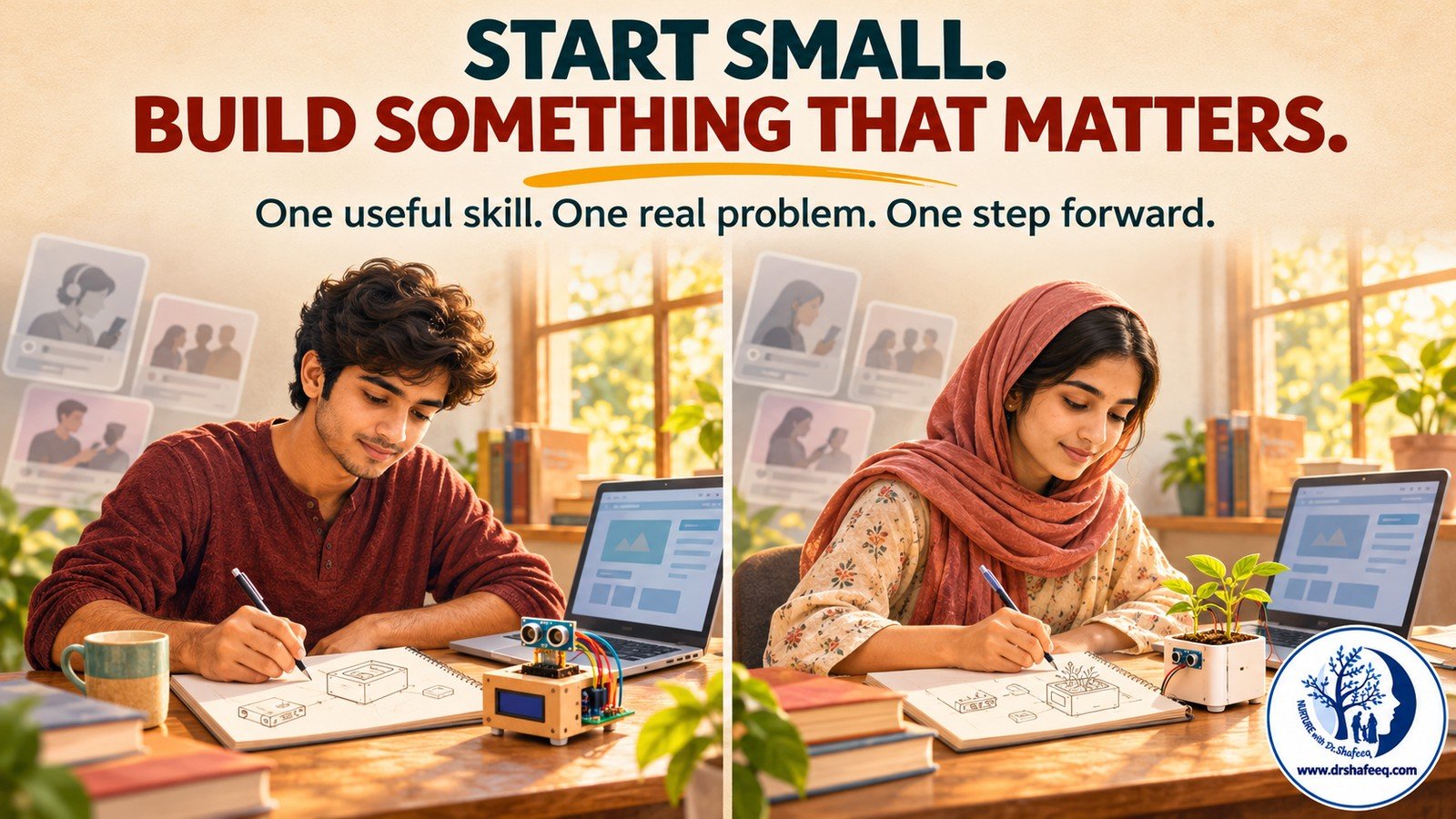
From Zero to Something That Matters
For Gen Z: Build a life of purpose, not just a profile of success.
By Dr. Shafeeq Ahmed
You open your phone, and someone your age has launched a company, bought a home or announced their dream job. You close it and look at your own life: unfinished applications, uncertain plans and a bank balance that seems unmoved by your ambitions.
It is easy to call that position “zero”.
But having little money, experience or recognition is not the same as having nothing to offer. You are at a starting point—not receiving a final verdict.
In Zero to One, Peter Thiel, writing with Blake Masters, distinguishes repeating what already exists from creating something genuinely new. Its central challenge is to find overlooked opportunities rather than simply imitate other people’s success.
Uves Sareshwala’s reflection, “Zero to Hero: The Making of the Hero in You,” brings a complementary question: what kind of person must you become while building your future?
Put the two together, and a practical principle emerges: create something useful without losing yourself in the process.
1. Stop auditioning for somebody else’s life
You do not need to become the next version of a famous founder—or the most impressive person in your school reunion photograph.
Start closer to home. What frustrates people around you? What do they struggle to understand, organize or access? Which of those problems could you help solve?
Perhaps a neighborhood business needs a clearer catalogue. Younger students need affordable tutoring. A community organization needs help managing its records.
Your first contribution does not have to be revolutionary. It must be genuinely useful.
This week, speak to three people about one recurring difficulty. Listen before proposing a solution. Then try one small improvement.
Originality begins with paying attention, not with announcing that you are an innovator.
2. Build evidence, not just confidence
“Believe in yourself” is encouraging. A completed piece of work gives that belief somewhere to stand.
Choose one useful skill: writing, bookkeeping, design, coding, teaching, sales or another field that interests you. Give it a manageable, regular place in your week. Learn the fundamentals, practice and ask for specific feedback.
Then create something you can show.
Not “I am passionate about design,” but “Here are three designs, why I made these choices, and what I improved after feedback.”
Use AI tools thoughtfully where appropriate. Check their output, protect private information and be transparent when disclosure is required. Your responsibility is not to produce the most impressive-looking answer; it is to understand and stand behind your work.
3. Make discipline small enough to repeat
You do not need a dramatic reinvention by Monday.
Tonight, choose tomorrow’s most important achievable task. Set aside a realistic time for it and put your phone beyond easy reach while you work.
For a Muslim reader, prayer can provide anchors for reflection and daily structure. Readers of other faiths—or none—can also protect regular pauses to remember what matters beyond deadlines.
Rest belongs in this structure too. A routine that leaves no room for sleep, relationships or recovery is not proof of commitment.
The aim is not to control every minute. It is to keep one worthwhile promise to yourself, then build from there.
4. Take risks you can survive
A small experiment is often more useful than an expensive declaration of ambition.
Before launching a business, test whether anyone needs what you offer. Before paying for a course, examine its content, cost and alternatives. Before borrowing, understand the repayment obligation—not merely the hoped-for income.
Keep records. Put agreements in writing. Avoid risking money that someone else depends on without their informed agreement.
When something fails, ask:
What did I assume?
What did the experience actually show?
What will I change next time?
“I misjudged the costs” is a lesson. “I am a failure” is a sentence you do not need to impose on yourself.
5. Do not confuse responsibility with isolation
Sareshwala’s emphasis on taking initiative is valuable. But initiative need not mean doing everything alone.
Ask a teacher to review your plan. Request feedback from someone experienced. Apply for a scholarship. Join a constructive peer group. Seek professional support when distress is persistent or daily life feels unmanageable.
There is dignity in receiving help, just as there is dignity in offering it.
Unequal opportunities, discrimination, illness and family responsibilities cannot be wished away by motivation. Acknowledge those realities without assuming they decide everything.
Ask: “Given my circumstances, what is one useful move—and who could help me make it?”
6. Become someone people can trust
Talent may attract attention. The more important question is what happens after people rely on you.
Meet the deadline—or warn them early. Admit what you do not know. Give credit. Correct your mistakes. Treat people respectfully when they have nothing to offer you.
You need not become wealthy or famous to live courageously. Sometimes courage is returning money you could have kept, refusing dishonest work or beginning again after an ordinary disappointment.
And when you gain experience, share it. Someone else is standing where you once stood.
Your next seven days
Keep the beginning modest:
Choose one problem worth understanding.
Select one skill that could help.
Schedule three focused practice sessions.
Produce one small piece of work.
Ask one person for honest feedback.
Make one improvement.
No seven-day plan can promise success. It can, however, turn uncertainty into an experiment.
You do not have to become a hero overnight. Begin by becoming a little more capable, useful and dependable.
Build something that matters. Become someone others can rely on. Neither requires an audience to count.
#NurtureWithDrShafeeq
Acknowledgement: Inspired by Peter Thiel and Blake Masters’s Zero to One: Notes on Startups, or How to Build the Future, and Uves Sareshwala’s “Zero to Hero: The Making of the Hero in You” (newsletter edition, 24 November 2026), supplied for this article. Their ideas inform this reflection; the practical synthesis and framing are the present author’s.
Dr. Shafeeq Ahmed S.M
Pediatrician, child psychologist, parenting coach, and career & life counsellor with over 20 years of experience. Read full bio →