Healthy Is the Hardest Product to Sell
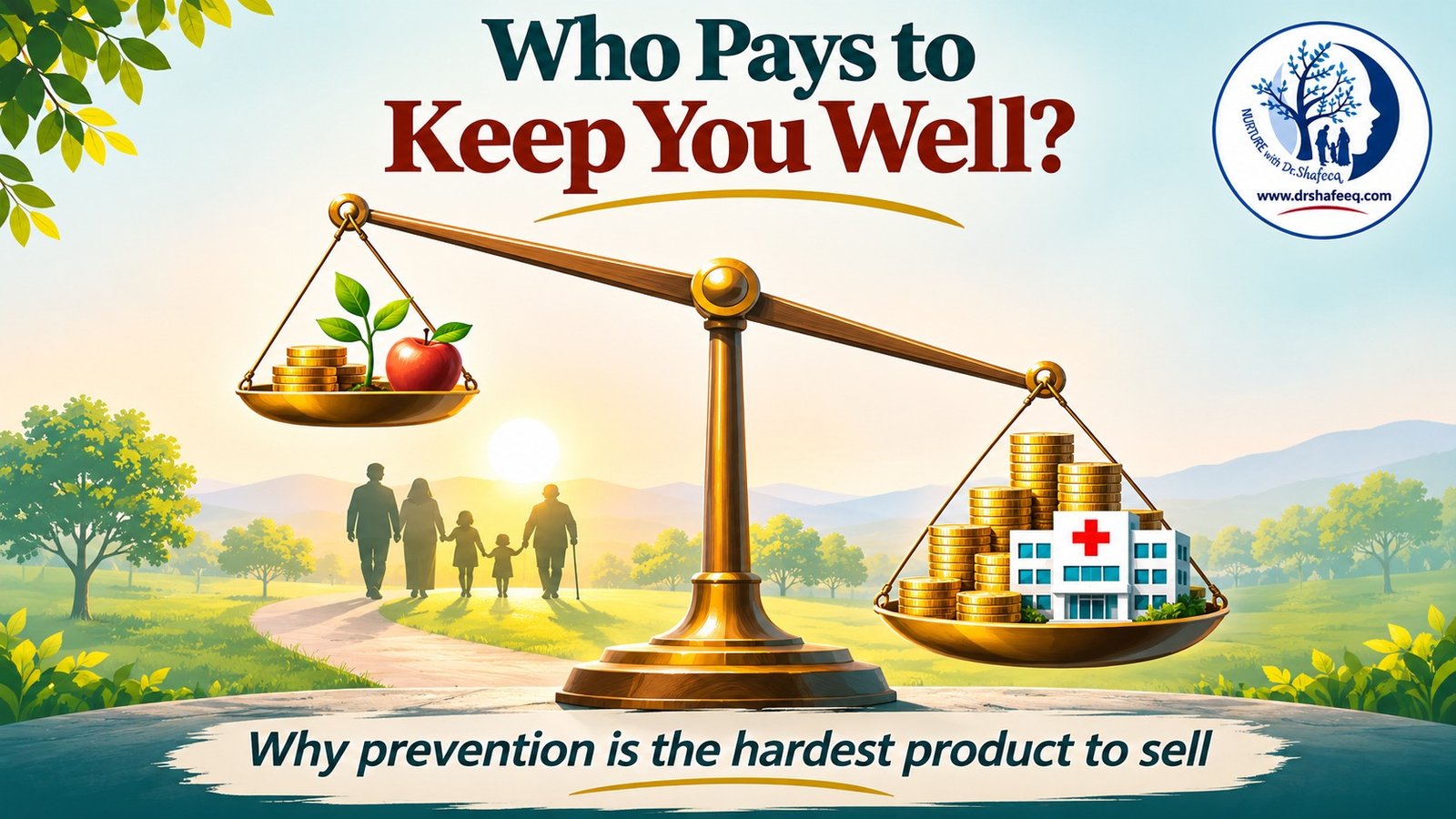
Healthy Is the Hardest Product to Sell
What if the greatest success of a health system is the patient it never has to treat?
By Dr. Shafeeq Ahmed
A thoughtful investor recently raised a question that stayed with me. India has built impressive hospitals, with more beds, better technology and world-class doctors. Yet the businesses that keep people well have found the road much harder. This post builds on that observation and takes it further.
The paradox
We celebrate what hospitals do, and rightly so. But a health system that only gets better at treating illness is a system that expects illness. Non-communicable diseases such as heart disease, diabetes, cancer and stroke are now linked to roughly 60 percent of deaths in India. Much of the cardiovascular burden can be reduced by addressing behavior: tobacco, diet, alcohol and inactivity.
Yet the money goes elsewhere. Preventive care makes up only about 13.5 percent of India's current health expenditure, while inpatient and outpatient curative care together take well over half.
Why prevention is a hard business
We pay for crises, not for habits. When illness strikes, families spend lakhs without hesitation. Spending thousands to avoid the same illness feels optional, because the benefit is invisible. Nobody sees the heart attack that did not happen.
Money flows to treatment. Households still paid about ₹4.06 lakh crore directly in 2023-24, which is 42.7 percent of total health spending. Hospitalization is more likely to be reimbursed, and a large part of prevention is paid from our own pockets. Outpatient insurance with preventive check-ups exists, but it usually comes with limits, such as an annual cap or a waiting period.
Habits are hard to sell. A hospital earns from an event. A wellness business must earn from a habit, which means keeping someone motivated for years. Most of us start a fitness plan with energy and drop it within weeks.
The rewards are delayed and diffuse. If a programme prevents a heart attack in 2035, who pays the programme? The patient saves money, the employer saves productivity, and the insurer saves a claim. The company that made it happen is rarely paid for it.
Progress worth noting
The picture is changing. The share of health costs paid out of pocket has fallen from 64.2 percent in 2013-14 to 42.7 percent in 2023-24, while government health spending has risen from 28.6 to 43.5 percent of the total. That gives families more room to spend on staying well. But it also shows the gap: most of the extra money is still going to treatment.
What a better model could look like
The next great health business may not be another hospital chain or another app. It may be one that makes prevention measurable, affordable and rewarding. Some directions:
Pay for outcomes. Insurers and employers could reward measurable improvements, such as controlled blood pressure or blood sugar, with lower premiums or credits.
Bundle prevention into things people already buy. Health checks inside insurance, workplace programmes and community clinics reduce the need for people to opt in.
Use data honestly. Simple, trusted measurements, repeated over time, can show people their risk falling. People stay with what they can see working.
Make prevention local and affordable. Screening, nutrition guidance and vaccination in the neighbourhood, in the language people speak, lowers cost and builds trust.
Share the savings. If a programme reduces claims or sick days, some of that value should return to whoever delivered it.
A role for everyone
Entrepreneurs can look for models where success means fewer admissions. Investors can value long-term outcomes, not only short-term revenue. Insurers and employers can pay for health, not only for illness. Schools, parents and community groups can build habits early, which is where lifestyle disease begins. And doctors can spend a few more minutes on the conversation that avoids the next visit.
A closing thought
Hospitals will always be essential. Nothing here suggests otherwise. But the true measure of a health system is not how full its wards are. It is how many people walk through life without needing one.
Can a prevention business ever be as profitable as a hospital? Perhaps not in the same way, or on the same timeline. But a healthier population is the strongest economic asset a country can build. The challenge is to turn that into a business worth building.
#NurtureWithDrShafeeq
(Inspired by a thought-provoking post from an investor in the healthcare sector.)

Dr. Shafeeq Ahmed S.M
Pediatrician, child psychologist, parenting coach, and career & life counsellor with over 20 years of experience. Read full bio →