Raising Thinkers, Not Just Toppers: 8 Life Lessons Every Child Deserves
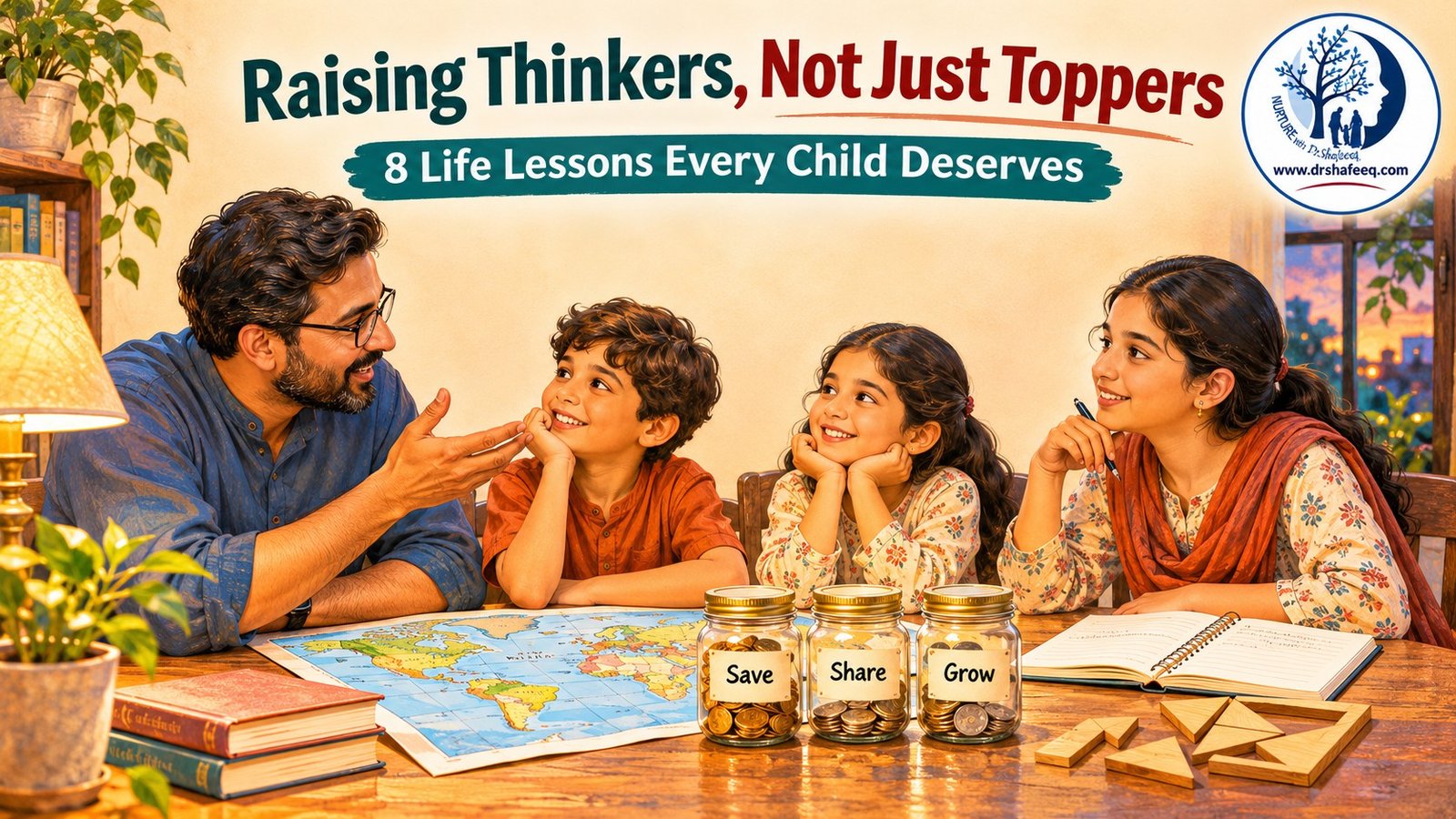
Raising Thinkers, Not Just Toppers: 8 Life Lessons Every Child Deserves
Children don't need costly courses to learn these skills. Everyday conversations at home can teach them.
By Dr. Shafeeq Ahmed
Metacognition, cognitive bias, decision-making and money management are rarely taught in school. Yet they shape how our children will think, choose and live. These lessons shouldn't be limited to wealthy homes. Every child deserves them.
The good news is that you don't need a special syllabus. Most of these lessons can be learned at the dinner table, in the car, at the market or during a quarrel between siblings. You also don't have to teach all eight. Start with one.
1. Thinking About Thinking (Metacognition)
Metacognition means noticing how we think. A child who can say, "I got angry, so I didn't listen," has started to manage their own mind.
At home: Ask after homework, "Which part was hard? What helped you understand it?" Over time, children learn how they learn.
2. How the World Works (Geopolitics)
Children see headlines about oil prices, borders, wars and trade. Most of the time nobody explains why these things happen.
At home: Keep a world map on the wall. When prices go up or a country appears in the news, ask together, "Where is it? Why might this affect us?" This builds curiosity, not anxiety.
3. When Our Minds Trick Us (Cognitive Bias)
We all take mental shortcuts. We believe the first thing we hear, trust people who agree with us, and judge others by appearance.
At home: When a sensational WhatsApp forward arrives, look at it with your child. Ask, "Who sent this? Is there proof? What might be missing?" This is media literacy at an early age.
4. Habits Matter, but Genes Aren't the Whole Story (Epigenetics)
Epigenetics shows that environment and behavior can affect how some genes work. This is still a developing field, so we shouldn't overstate it. Habits don't rewrite our DNA, and they can't overcome every inherited condition.
At home: Teach children that sleep, food, movement and stress management matter. Avoid labels like "He's weak in Maths because I was too." Family history can influence us, but it doesn't decide everything.
5. Why We Put Things Off (Procrastination)
Children don't always delay tasks because they're lazy. Often, they're afraid of failing, confused about where to start, or overwhelmed by the size of the job.
At home: Instead of saying, "Why are you so lazy?", ask, "Which part feels difficult?" Break the task down: "Let's just write the first paragraph." Small starts lower the fear.
6. Making Better Choices (Decision-Making)
Making good decisions is a skill that improves with practice, not a gift some children are born with.
At home: Give children choices that fit their age, such as which sport to play, how to spend pocket money, or how to plan a weekend. Talk through the options and consequences together. Sometimes let them make small mistakes and learn from them safely.
7. The Brain Keeps Changing (Neuroplasticity)
The brain can strengthen pathways through repeated practice and experience. That's why it's hopeful to say, "You can't do it yet."
At home: Praise effort and strategy, not just results. "You kept trying different methods" builds more resilience than "You're so smart." Also notice what children practice every day, including hours of scrolling.
8. Understanding Money (Financial Literacy)
Many adults have never learned budgeting, saving, debt or investing. Children can start much earlier.
At home: Give a small, fixed amount of pocket money. Use three jars: spend, save and share. Let older children compare prices while you shop or help plan a family budget. In Muslim families, the "share" jar can also teach Sadaqah and gratitude.
Recommended Books for Parents
Scott Brooks suggested these titles in his original post. They're written for adults, so read them yourself first and share the ideas in simple words:
Think Again by Adam Grant (thinking about thinking)
Prisoners of Geography by Tim Marshall (geopolitics)
Thinking, Fast and Slow by Daniel Kahneman (cognitive bias)
The Gene by Siddhartha Mukherjee (genetics and epigenetics)
The War of Art by Steven Pressfield (procrastination; motivational rather than scientific)
Decisive by Chip Heath and Dan Heath (decision-making)
The Brain That Changes Itself by Norman Doidge (neuroplasticity)
Rich Dad Poor Dad by Robert Kiyosaki (financial mindset; read critically, since financial experts have questioned some of its advice)
A Gentle Reminder
These lessons aren't a race to raise the next millionaire. The aim is to raise children who think clearly, choose wisely, handle money responsibly and question what they hear, while staying kind.
Pick one topic this week. Have one conversation. Ask one good question.
Children learn the most from parents who are still learning.
#NurtureWithDrShafeeq
(Inspired by a post on X by Scott Brooks, 25 November 2026.)

Dr. Shafeeq Ahmed S.M
Pediatrician, child psychologist, parenting coach, and career & life counsellor with over 20 years of experience. Read full bio →